
Business Electricity Plans Australia
A practical business electricity guide covering demand tariffs, operating hours, benchmark bills and switching checks for Australian small businesses.
CompareUs Editorial TeamConsumer utilities editorial team
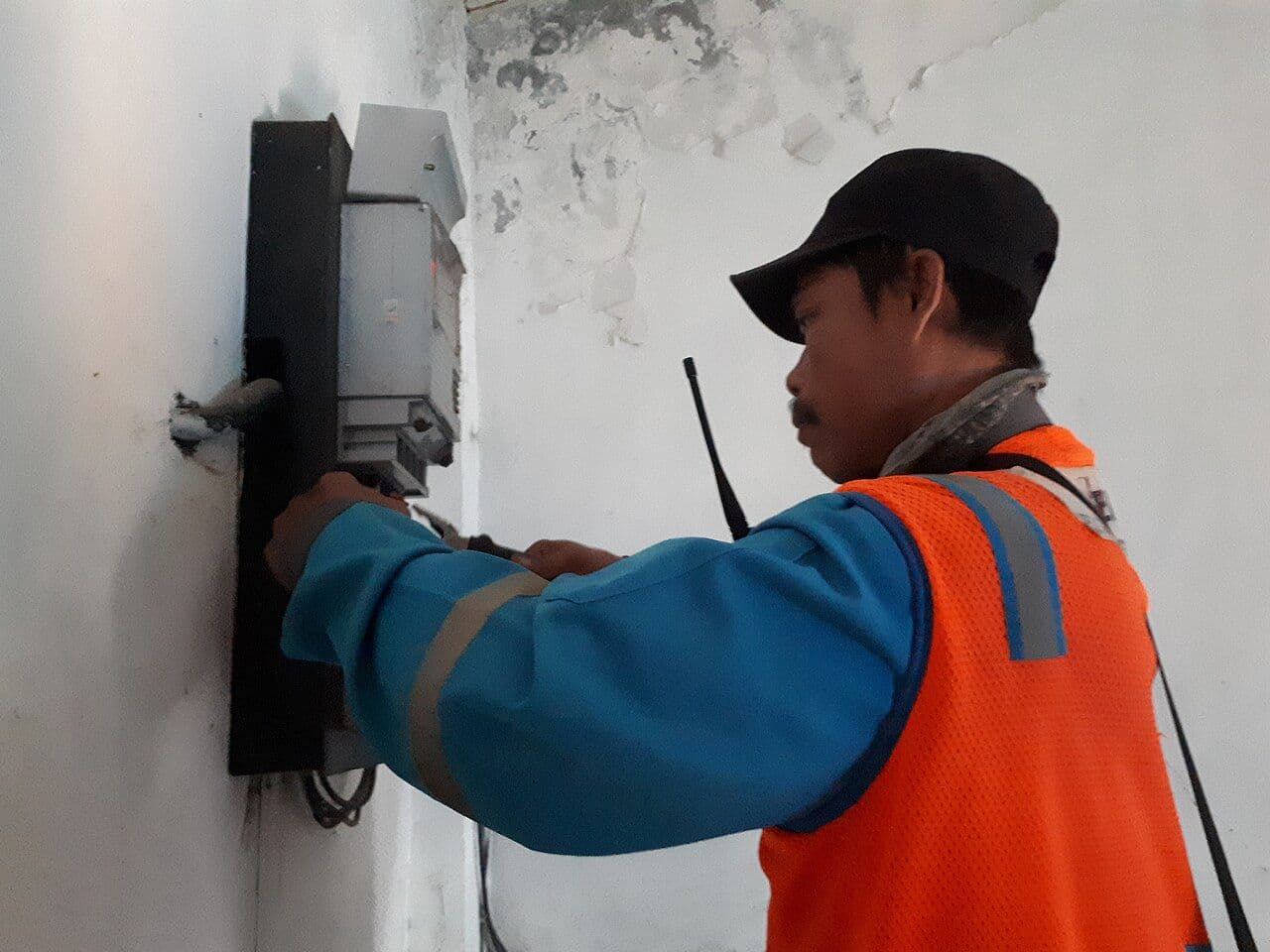
Business electricity plans should be compared against trading hours, meter type, demand exposure and cash-flow needs. A workshop in regional New South Wales, a South East Queensland office and a South Australian cafe can all face different baseline costs before a retailer margin is added.
Quick answer
Start with the annual bill estimate, not the headline discount. Compare supply charge, usage rates, demand charges, contract length, payment terms and solar fit on the same meter assumptions. For most small businesses, the best plan is the one that cuts the full annual bill without creating a worse demand charge or exit condition.
State benchmark examples
CompareUs' current state references show why network area matters. Small business examples sit at $4,977 in Ausgrid, $4,775 in Endeavour Energy and $6,222 in Essential Energy for New South Wales. In South East Queensland, the 2026-27 Energex small-business examples are $3,849 on a flat tariff and $3,693 on time of use. In South Australia, SA Power Networks benchmarks are $5,162 on flat rate and $4,868 on time of use for 10,000 kWh.
How to compare offers without guesswork
Use a recent bill with 12 months of usage if you have it. Match annual kWh, tariff type, NMI and GST treatment across every quote. Then compare at least three offers from retailers active in your area, such as AGL, Origin, EnergyAustralia, ENGIE, Alinta or GloBird where available. If a broker or retailer will not show the demand assumptions used in the estimate, treat the quote as weak.
Tariff, meter and usage checks
Demand tariffs can matter more than a lower usage rate. If the bill shows a kW or kVA demand line, check the window used for the demand charge and when your largest loads start up. A bakery that powers ovens at once or a salon that runs dryers during the afternoon peak can lose savings fast. Also check whether controlled load, separately metered hot water or solar export data are being carried over correctly into the quote.
Solar, EV and household fit
Solar can suit businesses with daytime usage because self-consumption is often stronger than in a typical household. A medical clinic, office or retail store may use more of its own generation between 9 am and 5 pm, which means import rates can matter more than the feed-in tariff. If the business is adding EV charging, test whether that load lands overnight on a cheap tariff or pushes up demand during the day.
Rebates, concessions and protections
Small businesses generally do not receive the same concession structure as households, so payment flexibility and hardship support matter more. Check direct debit rules, paper bill fees, security deposit clauses and whether the retailer can offer tailored payment plans if trading conditions change. If the premises is relocating or expanding equipment, avoid judging a new contract on last year's bill alone.
What to do before you switch
Collect one full year of bills, note tariff type, annual kWh, peak demand and solar exports, then compare offers at /electricity. Use /electricity/nsw, /electricity/qld or /electricity/sa to check the local benchmark context. Use /electricity to compare current offers, keep the same annual kWh and tariff type across every quote, and then open /calculators/electricity-cost or /calculators/gas-cost to test the annual bill before you switch. If the business also uses gas for heating, cooking or hot water, compare the gas account separately because gas supply charges and MJ rates are not covered by electricity benchmarks.
Bill maths example
A small rate difference becomes real money over a year. On 6,500 kWh of annual use, a 2 c/kWh gap is $130. A 10 c/day supply-charge gap is another $36.50. If the home has 1,800 kWh on controlled load and one plan is 3 c/kWh higher on that line, that adds $54. These are the kinds of bill maths that decide whether a plan is actually cheaper.
Solar households should run the same test on exports and imports. If one retailer pays 2 c/kWh more on 8 kWh of average daily exports, that is about $58.40 a year. If the same plan charges 3 c/kWh more on 4,000 kWh of annual imports, that adds $120. The export headline looks better, but the total bill is worse.
Who this kind of plan usually suits
Single-rate plans tend to suit homes with steady evening use, low appetite for timing appliances and no need to chase a smart-meter feature. Time-of-use or EV-style pricing tends to suit households that can delay charging, laundry, pool pumps or hot-water recovery into lower-cost periods. Solar-heavy homes need enough daytime self-consumption or a strong net-bill result to justify a special solar product.
Renters and low-usage homes should check the fixed daily charge first, because a small apartment can be penalised by a high supply charge even when the usage rate is good. Larger family homes, battery owners and EV households should test the whole-home bill because a plan that looks cheap on one line item can fail once high evening imports or charger load are added back in.
Checks for the first bill after switching
The first bill should show the right NMI, tariff type, meter read dates, controlled-load line and concession status. If a household moved from single rate to time of use, check that the new peak, shoulder and off-peak windows are the ones quoted in the plan document. If solar is installed, confirm the feed-in tariff and exported kWh line appear exactly as expected.
If the first bill is estimated rather than based on an actual read, keep the plan but monitor the correction on the next bill before deciding whether the switch worked. If the concession is missing, contact the retailer immediately because missing support can distort the annual comparison. If the supply charge or tariff type is wrong, fix that before judging the plan.
Questions worth asking the retailer
Ask which tariff type the quote is based on, whether the meter must be reconfigured, whether controlled load stays active, whether direct debit is mandatory for the advertised rate and how solar exports are credited. If the retailer cannot explain those fields clearly, the quote is not ready for a final decision.
Ask how often prices can change, whether there are exit fees, whether paper bills or card payments cost extra and whether the annual estimate includes GST. Business customers should ask how demand is calculated. EV owners should ask exactly when the off-peak window starts and ends. Battery owners should ask whether the plan has any export or virtual power plant conditions.
These questions sound basic, but they are what turn a generic retailer article into a useful switching guide. Readers can act on them immediately with a recent bill in hand, and each answer affects the real annual cost more than a slogan about flexible energy or smart savings.
Common mistakes
The main errors are comparing residential advice with a business meter, ignoring demand charges, trusting a percentage discount without checking the reference rate, and using a single summer or winter bill as the annual baseline. Another common problem is accepting an auto-renewal even though the business has changed trading hours, air-conditioning load or refrigeration equipment since the last contract.
Sources and methodology
This guide uses CompareUs state electricity references, current 2026-27 DMO benchmark examples where relevant, and practical small-business billing scenarios. It avoids naming one universal cheapest plan because business costs vary by network zone, usage shape, meter type and contract terms.
Where should you go next?
FAQs
What is the best business electricity plan?
The best plan is the one with the lowest realistic annual cost after demand charges, supply charges, operating hours and contract terms are included.
Are business electricity plans different from household plans?
Yes. Small-business plans can include different tariff structures, demand charges, billing rules and benchmark assumptions.
Why do demand charges matter for a business?
A short usage spike can lift the bill even if the cents per kWh rate looks low, so demand tariffs must be checked before switching.
Should a business with solar focus on the feed-in tariff?
Not by itself. Most daytime-heavy businesses should compare the net annual bill, because self-consumption often matters more than the export rate.
How should I compare business electricity offers?
Use the same annual usage, tariff type, meter details and GST treatment across every quote, then compare annual cost and contract terms side by side.