
Flexible Solar Exports in Australia: Static vs Dynamic Limits
An Australian guide to flexible solar exports, dynamic operating envelopes, static limits, compatible inverters and internet requirements.
CompareUs Editorial TeamConsumer utilities editorial team
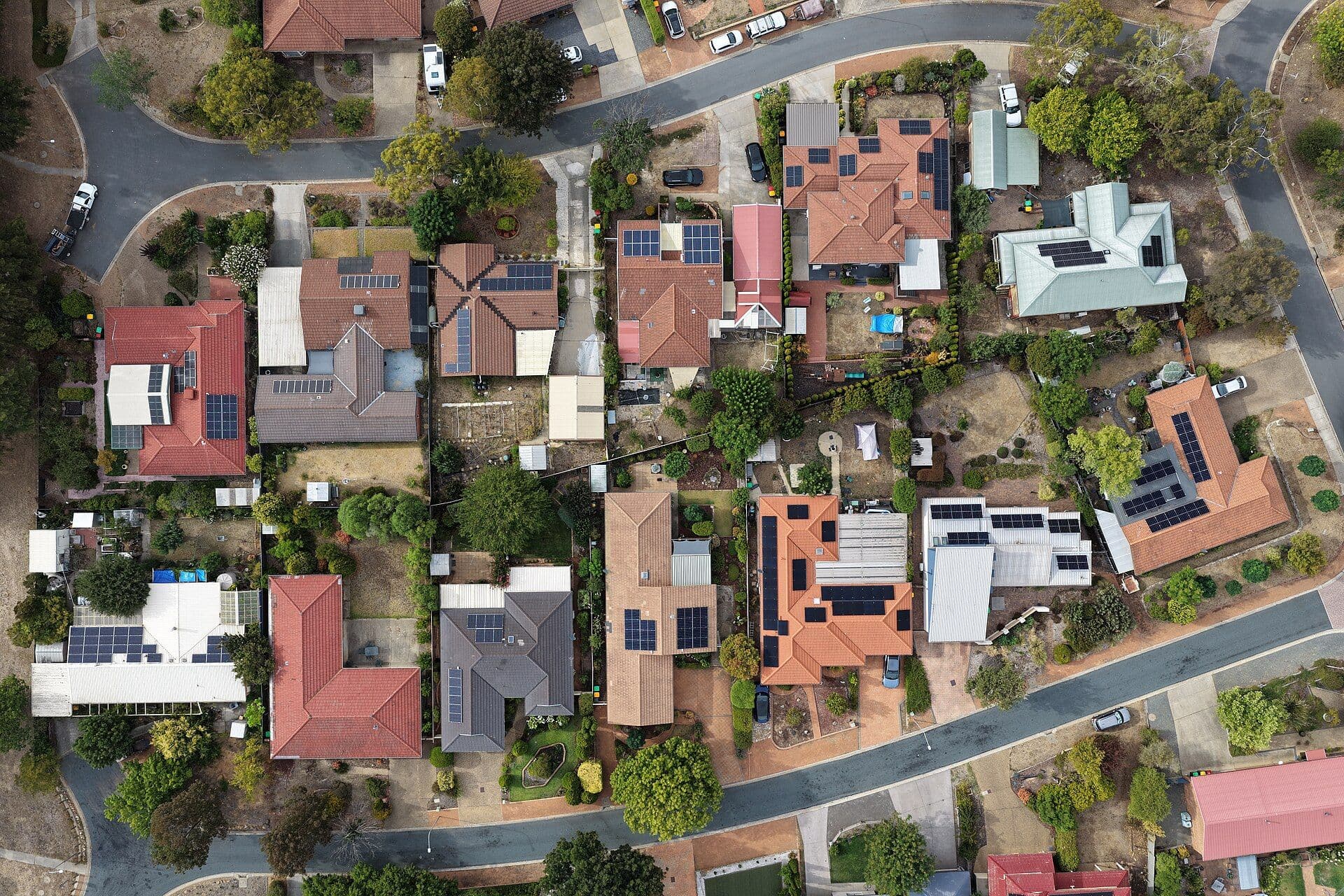
Flexible solar exports in Australia let a distribution network vary a site's export limit as local capacity changes. They are also called dynamic connections or dynamic operating envelopes. Unlike a fixed limit that stays the same, a flexible limit can allow higher exports when the grid has room and reduce them during congestion.
Quick answer
A static solar export limit is fixed in the connection agreement. A flexible or dynamic export limit changes in response to local network conditions and is sent to compatible equipment through an internet connection. It may increase export opportunities, but actual credits still depend on solar generation, household use, retailer feed-in tariffs and periods of constraint.
Key takeaways
- The distributor controls connection limits; the retailer sets the feed-in tariff.
- Flexible exports can be higher most of the time without guaranteeing maximum export at every moment.
- A compatible inverter or gateway and reliable communications are normally required.
- Fallback limits can apply when communications fail.
- Rules vary by distributor, phase, system design and connection date.
Why export limits exist
Distribution networks were historically designed to deliver electricity from larger generators to customers. Rooftop solar reverses some of that flow. When many systems export at the same time, local voltage or equipment capacity can constrain how much additional generation the network can accept safely.
A distributor assesses a solar or battery connection and specifies the maximum export permitted at the connection point. The inverter capacity and panel capacity are related but different: a home can have a larger array while being required to limit what crosses into the grid. Self-consumed solar does not become an export.
Static export limits
A static limit is a fixed ceiling. The system must remain at or below that export level regardless of whether the local network is quiet or congested. Static arrangements are comparatively simple and do not need a live dynamic signal, but a constrained address may receive a low or zero limit that leaves available network capacity unused at other times.
The number is address-specific. Common figures discussed in marketing are not an entitlement. Phase configuration, local transformer conditions, existing solar and the distributor's standards all affect the offer made through the connection application.
Flexible exports and dynamic operating envelopes
A flexible arrangement allows the distributor to calculate an export limit for a site or local area and communicate it to the customer's control equipment. The limit can rise when the network has spare capacity and fall when simultaneous exports create congestion. The inverter or gateway must respond so exports remain inside the current envelope.
SA Power Networks describes its Flexible Exports option as an alternative to a low fixed limit in constrained areas, with compatible internet-connected equipment able to export up to a higher ceiling when conditions allow. Energex uses the term dynamic connection and sends updated limits at five-minute intervals. AusNet's Victorian work similarly uses smart inverters to adjust exports against local capacity.
These examples share the principle but not identical commercial or technical terms. Always use the connection offer for the address.
Network examples across Australia
South Australia moved early with a broad flexible-exports service. SA Power Networks says new systems in relevant areas can choose between the available fixed option and a dynamic option, subject to eligibility and equipment requirements. Its published material contrasts a low fixed export with flexible exports up to 10 kW per phase when capacity permits.
Energy Queensland offers dynamic connections through Energex and Ergon Energy Network. Energex says eligible low-voltage systems can receive a dynamic limit up to 10 kW per phase, compared with basic-connection limits, with a minimum or fallback limit applying under specified conditions.
In Victoria, distributors have trialled and implemented flexible connection capabilities alongside emergency-backstop requirements. AusNet says its trial helped eligible customers previously facing low or zero limits export more, and that flexible connections are available for eligible constrained customers.
Other networks may use connection-specific export controls, trials or evolving standards. The absence of the phrase flexible exports on a retailer website does not answer what the distributor permits.
Equipment and internet requirements
Dynamic operation generally requires a compatible inverter, gateway or site controller that supports the required Australian communication profile. The installer must select approved equipment, configure it correctly and submit the connection application. Compatibility should be confirmed against the distributor's current list rather than inferred from a general inverter brochure.
Reliable internet matters because the controller needs to receive network limits. Ask what happens during a short outage, an extended loss of communication, a router replacement or a change of internet provider. Energex says a lower fallback export applies where communications remain unavailable. The owner should understand how to reconnect the system and where the monitoring status appears.
Does flexible exporting guarantee a higher feed-in credit?
No. It creates the opportunity to export within a potentially higher limit. The home still needs surplus solar at that time, and the retailer must credit exported energy under the plan's feed-in tariff and conditions. A high ceiling at 5 pm is not useful if the panels are no longer producing much. A reduced limit at midday may have little bill impact if an EV, heat-pump hot-water system or battery is absorbing surplus solar.
Compare self-consumption, exports and the retail plan together. A plan with a high feed-in tariff can still produce a poor annual outcome if import rates, supply charges or export caps are unfavourable.
Batteries, EVs and flexible exports
A battery can store solar that would otherwise be exported or curtailed, then supply the home later. Whether it should export to the grid depends on the connection agreement, retailer or virtual-power-plant terms, reserve settings and the value of keeping energy for household use.
Dynamic standards are expanding beyond solar to other consumer energy resources. The controller may need to coordinate solar, a battery and bidirectional EV equipment behind the same connection point. Do not assume separate apps can each use the full connection capacity independently.
What to ask the installer
Ask for the approved static and flexible options for the exact address, the maximum and fallback limits, compatible equipment, communication method, monitoring access and any ongoing service dependency. Request written confirmation that the design meets the distributor's connection agreement and relevant emergency-control requirements.
The quote should separate panel capacity, inverter capacity, battery inverter capacity and export limit. These numbers are often confused, and each can affect future upgrades.
How to monitor whether exports were constrained
The inverter, gateway or retailer portal may show solar production and grid export, but not every app labels a network constraint clearly. Ask the installer which screen records the dynamic limit and whether historical limits can be downloaded. Compare export with production and household load before concluding that the network curtailed the system. Clouds, inverter temperature, battery charging and household appliances can all reduce exports without a network instruction.
Keep screenshots and connection details if performance appears inconsistent with the approved arrangement. Start with the installer or equipment provider, then ask the distributor about the connection if the system is demonstrably receiving unexpected limits. Never change inverter export settings yourself, because doing so can breach the connection agreement and create safety or compliance problems.
Internal resources
Compare solar-related plan factors through CompareUs electricity, read about solar feed-in tariffs, and estimate household import costs with the electricity cost calculator.
Examples of static and flexible solar export approaches
| Network example | Static approach | Flexible approach | Customer requirements |
|---|---|---|---|
| SA Power Networks | Fixed low or zero-export options can apply in constrained areas | Dynamic ceiling can rise to 10 kW per phase when capacity permits | Eligible address, compatible equipment and reliable internet |
| Energex / Ergon Energy Network | Basic connection uses a fixed approved limit | Dynamic connection receives changing limits, potentially up to 10 kW per phase | Approved controller, communications and compliant connection |
| AusNet | Constrained sites may receive low or zero fixed exports | Flexible connection adjusts exports using local network capacity | Eligibility, compatible smart inverter and network approval |
Action checklist
- Identify the distributor for the address.
- Ask the installer for both static and dynamic outcomes.
- Confirm maximum, minimum and fallback export limits.
- Verify inverter or gateway approval.
- Confirm internet and reconnection requirements.
- Separate panel, inverter and export capacities.
- Model self-consumption and feed-in tariffs together.
- Keep the final connection agreement.
Common mistakes
- Treating a common export limit as a nationwide right.
- Confusing inverter size with the permitted grid export.
- Assuming the maximum dynamic limit is always available.
- Ignoring communications fallback behaviour.
- Choosing a retailer plan solely from the feed-in tariff.
Sources reviewed
- SA Power Networks Flexible Exports - South Australian fixed and flexible options and equipment requirements.
- Energex Dynamic Connections - Queensland limits, communications and fallback behaviour.
- AusNet flexible exports trial - Victorian flexible-connection principles and trial results.
Where should you go next?
FAQs
What are flexible solar exports?
They are export limits that change with local network capacity rather than remaining at one fixed ceiling.
Are flexible exports the same as dynamic connections?
The terms describe the same broad concept, although distributors may use different technical and contractual arrangements.
Can flexible exports reach 10 kW?
Some network offers allow a ceiling of up to 10 kW per phase, but eligibility and the actual limit are address- and time-dependent.
Do flexible exports need internet?
Usually. Compatible control equipment needs communications to receive changing limits, and a lower fallback can apply after a communications failure.
Will I earn more from flexible exports?
Possibly, but it depends on available surplus solar, constraints, feed-in tariffs, import rates and household self-consumption.
Can an existing solar system switch to flexible exports?
It may be possible if the address is eligible and the equipment is compatible. Ask the distributor and an accredited installer before changing settings.