
FTTP Vs FTTN Explained
A practical FTTP vs FTTN guide for Australians comparing NBN connection types and upgrade value.
CompareUs Editorial TeamConsumer utilities editorial team
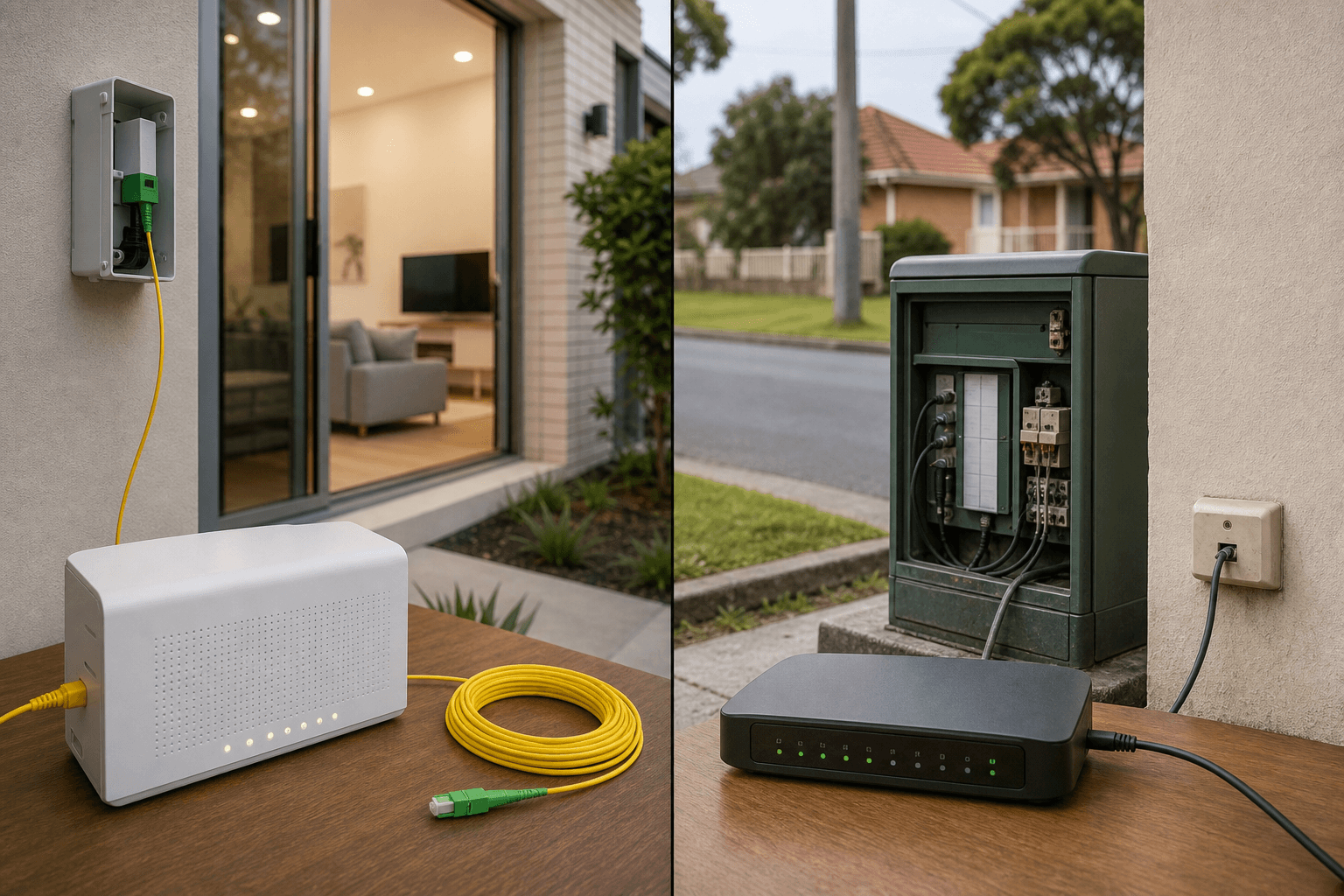
FTTP vs FTTN is one of the most important broadband comparisons in Australia because the technology type at your address can shape what speeds are realistic, what upgrades are available and how flexible the connection may feel over time.
What is FTTP?
The nbn network-technology guide explains that FTTP means Fibre to the Premises. In simple terms, fibre runs all the way to your property rather than stopping short in the street or neighbourhood.
That matters because fibre-based delivery generally gives more room for higher-speed services and future upgrade flexibility.
What is FTTN?
FTTN means Fibre to the Node. In this setup, fibre runs to a local node and the final segment to the home uses existing copper infrastructure. The nbn technology explainer makes clear that fixed-line connections differ mainly in how the nearest available fibre is connected to the premises.
That copper segment is the key limitation. Performance can depend more on line condition and other physical factors than on an all-fibre setup.
Why does FTTP usually feel more capable?
In practical terms, FTTP is usually better placed for faster speed tiers and more futureproof performance. FTTN can still work well in the right circumstances, but it tends to be more sensitive to the quality of the copper path.
The ACCC's latest broadband performance guidance specifically notes that some fibre-to-the-node services continue to fall short of full plan speeds, even while most NBN households overall are receiving speeds close to what was promised.
Does that mean FTTN is always bad?
No. Some FTTN connections perform well enough for normal household internet use. But the ceiling can be lower and the experience can be less predictable, especially if the line is older or the home is trying to move into faster speed tiers.
That is why two households on the same plan speed may not get the same practical result if one is on FTTP and the other is on FTTN.
When does the difference matter most?
The gap matters more when:
- you want higher speed tiers;
- the home is busy with several users at once;
- uploads and downloads are more demanding;
- you want more upgrade flexibility over time.
If you only need a modest plan and the current service is stable, the difference may feel less urgent. But if your household keeps pushing the limits of the connection, technology becomes more important.
What about fibre upgrades?
Current provider FAQs note that eligible homes may be able to move from older copper-based technologies such as FTTN or FTTC to FTTP through fibre-upgrade pathways when switching to qualifying higher-speed plans. Eligibility and plan requirements apply, so this is something to check by address rather than assume.
Common mistake
A common mistake is comparing providers without checking the actual connection technology first. The plan brand matters, but the access technology at the property can matter just as much.
Practical takeaway
If your address is on FTTP, you generally have more headroom and upgrade flexibility.
If your address is on FTTN, you should be more careful about assuming every fast plan will perform the same way as it would on fibre.
Sources and methodology
This guide uses current nbn network-technology guidance, current ACCC broadband performance commentary and current provider upgrade FAQ material. It focuses on practical differences that affect real household broadband choices.
Where should you go next?
FAQs
Is FTTP better than FTTN?
In general, FTTP offers stronger speed potential and upgrade flexibility because fibre runs all the way to the premises.
Why can FTTN be slower?
Because the final part of the connection uses existing copper, which can be more limiting than fibre.
Can FTTN still be good enough?
Yes. Some FTTN connections are perfectly workable for normal household use, especially on moderate speed tiers.
Can I upgrade from FTTN to FTTP?
Some eligible addresses may have upgrade pathways, often linked to qualifying faster plans. Eligibility should be checked by address.
Should I compare NBN plans differently on FTTN?
Yes. Technology type can affect how well higher-speed plans perform in practice, so it should be part of the comparison.