
Heat Pump Dryer vs Condenser Dryer Running Costs Explained
Heat pump dryer vs condenser dryer running costs: compare energy labels, cost per load and purchase prices to see which suits your laundry habits.
CompareUs Editorial TeamConsumer utilities editorial team
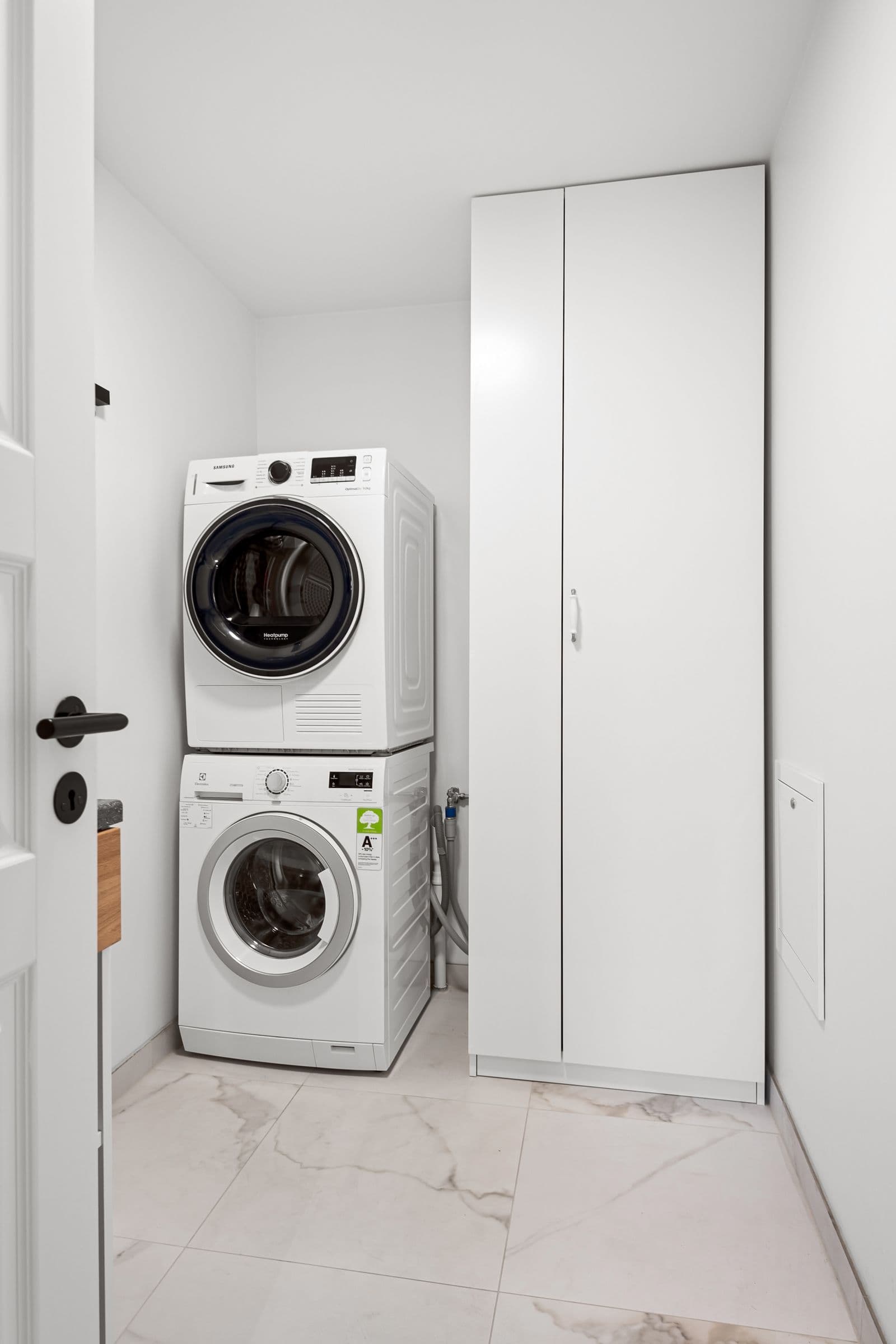
Heat pump dryer vs condenser dryer running costs become easier to compare when you stop looking at cycle length and start looking at kWh per load. A dryer that takes longer can still use less electricity. The harder question is whether those savings justify the amount you pay upfront for the way your household actually does laundry.
Quick answer
A heat pump dryer generally uses less electricity than a conventional condenser dryer, but the purchase-price difference matters. Compare labelled energy consumption at the same capacity, estimate your yearly loads, and multiply the energy difference by your electricity rate. Frequent dryer use makes lower running costs more valuable.
Heat pump dryer vs condenser dryer running costs: start here
There is an awkward naming issue. A heat pump dryer also condenses water, but retailers commonly separate heat pump models from conventional condenser models. In this guide, conventional condenser means a dryer that heats air with an electric resistance element and condenses the moisture rather than venting it outdoors.
A heat pump dryer recovers and reuses heat within its drying process. That is the main reason it can use less electricity. The Australian Energy Rating guide explains the technologies and how to compare their energy performance. Do not assume every product called condenser has the same design or efficiency.
Write down the exact model numbers, rated capacities, energy figures and purchase prices of the two machines you are considering. If one is much larger, the comparison needs an extra step: ask how you would load it. A larger drum is useful for some households, but its full-load label result may not resemble repeated small loads.
Read the label without turning it into a promise
The energy label is a standardised comparison tool. It is not a forecast of your household’s next bill. Australian dryer labelling uses an annual figure based on a standard load frequency; the Energy Rating label explanation describes the one-load-per-week basis for clothes dryers.
For a simple estimate, divide the applicable annual consumption figure by 52 to obtain a standardised per-load figure. Then multiply by your actual expected number of loads. Check the label and product documentation for the models you choose, particularly if labels or test standards differ. Compare like capacity and test conditions where possible.
Your results can differ because clothes begin wetter or drier, the load is smaller, the selected program changes, or the dryer stops at a different moisture level. A sensor cycle and an unnecessarily long timed cycle are not the same job. The label helps rank comparable machines; your habits determine how frequently you pay the running cost.
Calculate cost per load
The basic calculation is energy used in kWh multiplied by the electricity usage rate in dollars per kWh. Keep cents and dollars consistent. At 35 cents per kWh, a 2 kWh cycle costs $0.70, not $70. The daily supply charge is not an extra charge caused by that individual load.
If you have time-of-use pricing, use the rate for the actual cycle. A load crossing two tariff periods should be split if you have enough data, or estimated conservatively if you do not. A whole-house bill average can be misleading because it may include fixed charges, credits and unrelated usage.
You can try the arithmetic in the electricity cost calculator. Use measured cycle energy or a label-based estimate rather than multiplying the dryer’s maximum nameplate power by every minute of the cycle. The heater or compressor may not draw its maximum power continuously.
Worked example: three loads a week
The following machines and prices are hypothetical. They are not recommendations, market averages or quoted product specifications. Suppose a heat pump model uses 1.6 kWh per load and a conventional condenser model uses 4 kWh. Both complete the same drying task, and electricity costs 35 cents per kWh.
| Assumption or result | Heat pump example | Conventional condenser example |
|---|---|---|
| Electricity per load | 1.6 kWh | 4 kWh |
| Cost per load | $0.56 | $1.40 |
| Loads per year | 156 | 156 |
| Annual electricity cost | $87.36 | $218.40 |
In this example, the heat pump model saves 84 cents per load and $131.04 a year. If it costs $500 more to buy, the simple purchase-price payback is approximately 3.8 years. That calculation ignores financing, repairs, maintenance differences, resale value and changes in electricity prices. It is a screening tool, not a guarantee.
The important comparison is the difference between the actual models you could buy. A sale on one model, a delivery fee or a stacking kit can change the upfront gap. Add those before dividing by annual savings. Do not compare a premium heat pump machine with the cheapest conventional dryer unless both genuinely meet your needs.
Occasional use changes the answer
Using the same invented 84-cent saving, one load a week saves $43.68 a year. A $500 price difference would take about 11.4 years to recover through electricity alone. At five loads a week, the yearly saving becomes $218.40 and simple payback falls to about 2.3 years.
This is why a single claim such as “pays for itself quickly” is not useful without a load count. A household drying school uniforms and bedding through a wet winter has a different pattern from someone who uses a clothesline most of the year and switches on the dryer occasionally.
Count your own loads for a fortnight, then think about seasonal differences. Do not multiply a particularly wet week by 52 unless that is a fair description of the whole year. If you are replacing a dryer because the household is growing, model the new routine rather than relying only on past use.
Capacity, cycle time and getting the laundry finished
Lower running costs are only helpful if the machine suits the household. Check whether it can handle your usual towels and bedding, how long the relevant programs take, and whether you need several loads finished in one afternoon. A model’s quickest program may not dry the same load as its labelled test cycle.
Measure the laundry space, door clearance and access route. Confirm installation clearances and whether the dryer needs a drain connection or a water container emptied by hand. For stacking, use the manufacturer-approved arrangement and kit. Similar external dimensions do not establish that two appliances can safely stack.
Think about the person who will use it most. Controls that are easy to understand, a reachable filter and an accessible water container can matter more day to day than a feature that sounds impressive in a brochure. If an appliance is awkward to maintain, its expected efficiency may be harder to sustain.
Keep the comparison fair at home
Start with clothes spun appropriately in the washing machine, following garment and appliance instructions. Wetter clothes require more drying. Comparing one dryer after a high-speed spin with another after a gentle low-speed cycle does not isolate the dryer’s efficiency.
Clean lint filters and maintain any condenser or heat-exchanger components as the manufacturer directs. Do not block vents or ignore warning messages. Follow load limits, and avoid repeatedly running a cycle after the clothes are already dry. Separate items when their care labels require different treatment.
If you measure electricity, use equipment suitable for the appliance and electrical connection. Do not improvise adapters for a high-load appliance. For a hardwired installation or any uncertainty, ask a qualified electrician. Record the load type and program beside the kWh result so you can interpret it later.
Solar and cheap daytime electricity
Running a dryer while your panels are producing surplus electricity can reduce grid imports. The relevant cost is not necessarily zero, because using that solar means giving up whatever export credit would otherwise apply. If the cycle outlasts the surplus generation, some energy may still be bought from the grid.
Likewise, a free or discounted retail period has conditions. Check its time window, any cap, and the rates paid for the rest of the household’s use. Victorian readers considering a tariff change can read our Midday Power Saver guide. A dryer saving should not be counted twice: once as an efficiency saving and again as though all its former consumption were shifted for free.
You do not need to change electricity plans to compare dryer technologies. First work out the energy difference. Then, separately, see whether an available electricity offer better suits the home’s overall use. This keeps the appliance decision and the retailer decision understandable.
A buying worksheet you can take to the shop
For each model, record the exact model number, capacity, labelled kWh figure, expected loads a year, electricity rate and estimated annual cost. Add delivered purchase price, required installation accessories and any known recurring maintenance costs. Keep optional features separate from the financial calculation.
Next, test a lower-use year and a higher-use year. Ask yourself whether you would still choose the machine if it saved less than expected. Warranty terms, repair access, noise and the ability to finish the laundry on time are legitimate reasons to choose a model; they simply should not be presented as electricity savings.
If your current dryer works well and you rarely use it, keeping it longer may be the practical option. If it needs replacing and runs frequently, energy performance deserves more weight. Neither answer requires a universal winner.
Sources and review
The CompareUs Editorial Team checked the Energy Rating clothes-dryer guidance and label explanation on 27 September 2026. All product energy values and purchase prices in the worked examples are invented to demonstrate the method. Check current model labels before buying; this guide does not rank brands or claim laboratory testing by CompareUs.
Where should you go next?
FAQs
Is a heat pump dryer also a condenser dryer?
Technically it condenses moisture, but shops often use condenser dryer to mean a conventional electric-resistance condenser model. Check the technology in the specifications so you are comparing the intended products.
Can I divide annual label consumption by 365?
That does not give a useful cost per load. The Australian dryer label’s annual energy figure uses a standardised one-load-per-week assumption. Use the label guidance and model details, then adjust for your own load frequency.
Does a longer cycle always cost more?
No. Energy depends on electrical input over the whole cycle, not time alone. A lower-power heat pump cycle can run longer while using fewer kWh than a shorter resistance-heated cycle.
Should an occasional user always buy a heat pump model?
Not necessarily. If annual use is low, the running-cost saving may take longer to recover a higher purchase price. Compare capacity, convenience, installation requirements and expected ownership period too.
Is drying with rooftop solar free?
Solar can reduce paid grid imports, but using it may forgo an export credit. Weather and the timing of the cycle affect the result. Use the relevant tariff and export value rather than assuming every load costs zero.
Should I replace a working dryer immediately?
Not solely because a newer model uses less energy. Compare the additional purchase cost with realistic savings over the period you expect to use it. Repair needs, suitability and disposal also matter.