
MDF jumpering for apartment NBN: who arranges the connection?
Your provider says the NBN service is active but your apartment has no signal. Find out what MDF jumpering means, who can do the work and how to check the fee.
CompareUs Editorial TeamInternet guides
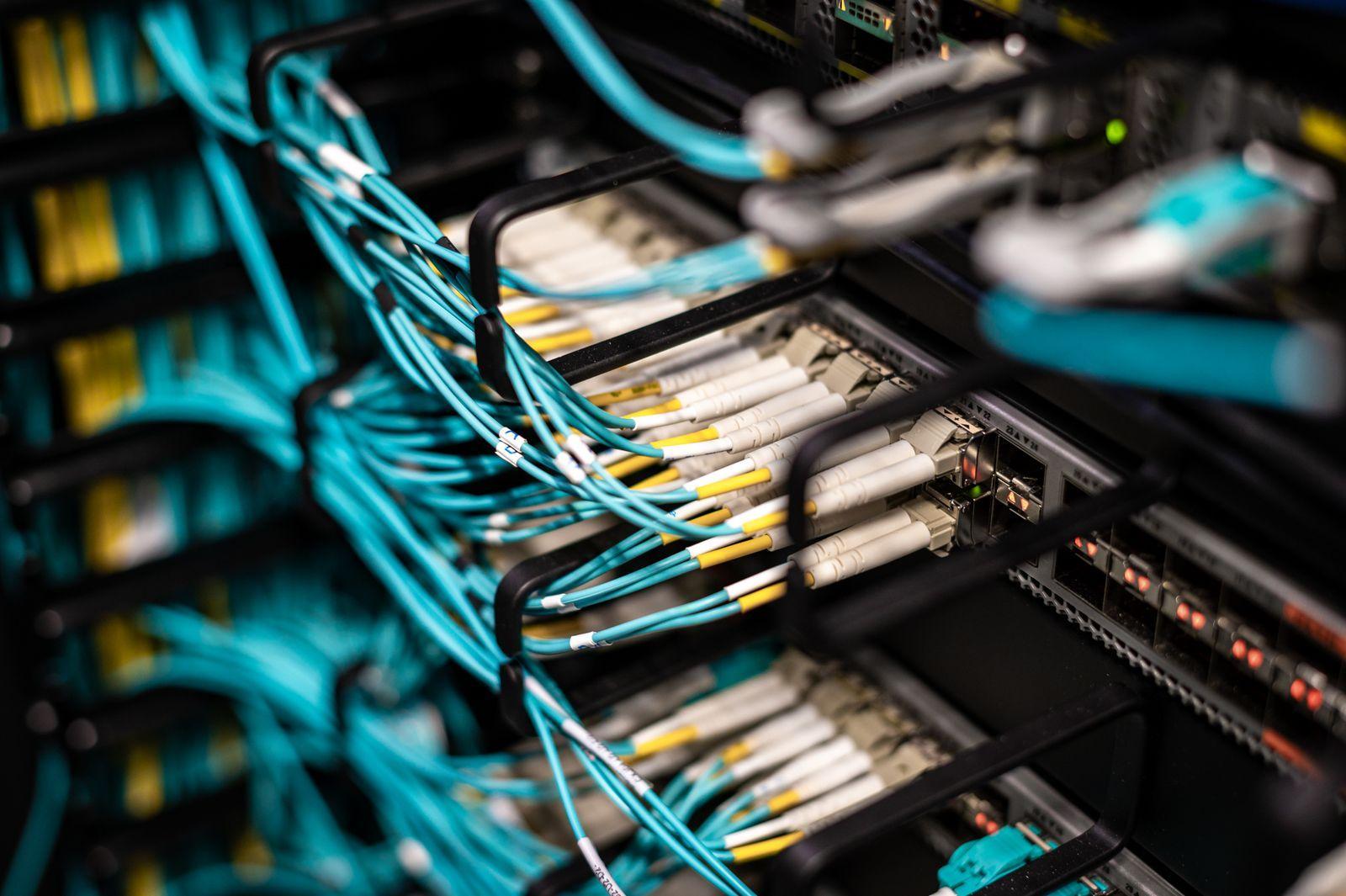
Move-in day is over, the modem is unpacked and your provider says the apartment's internet is active. Yet the DSL light keeps flashing. Then support asks whether the building's MDF has been jumpered. Before paying a technician or asking the building manager to unlock a cupboard, establish where the provider delivered the service and whether anyone has actually tested the connection to your unit.
What does MDF jumpering mean for an apartment?
MDF jumpering connects the relevant building distribution frame terminals to a unit’s internal communications wiring. Who arranges access and the work depends on the building, connection technology and provider’s order, so get the provider’s diagnosis before booking a cabler.
Find out which technology serves the unit
Ask the retailer for the access technology at the precise unit address. In a fibre-to-the-building arrangement, fibre reaches equipment in the building and existing copper can carry the final connection to the apartment. The service path may include an MDF. In a fibre-to-the-premises apartment with an installed optical connection box inside the unit, the path and equipment are different. Booking generic copper jumpering for that situation may waste a call-out.
Check the modem against the technology identified. A router with an Ethernet WAN port alone is not a DSL modem. An apartment with a fibre termination may instead need an Ethernet connection to a particular assigned port. Tell the retailer the exact device model, wall outlet and indicator behaviour. A remote order that is incomplete or equipment connected to the wrong port can look very much like a building wiring fault from the lounge room.
Ask what “active” means in the provider's system
“Active” can describe a billing status, a completed network order or a service tested at a defined handover point. Ask the provider which it means. Has it confirmed the correct service is available at the network boundary? Has anybody tested it at the unit socket? If the only evidence is an automated order-complete email, request the next diagnostic step before assuming that the building owner must pay for work.
For a copper service, ask whether the incoming pair has been identified for a registered cabler and what details can be given securely to the attending technician. NBN's technical guidance describes circumstances where a copper pair may be tagged to identify it to a cabling provider. A tag can help locate a particular service. Its existence does not certify the state of all cabling between the frame and your wall. NBN guidance on existing facilities and network boundaries
Work out who can authorise access
Ask the building manager or strata manager who controls the communications room and whether there is an approved access process. Some buildings require booked access, a sign-in, an escort or advance notice to an onsite caretaker. A registered cabler with the right tools can still spend the entire appointment waiting outside a locked door. Give the building contact and technician one another's booking information with their agreement.
If you are renting, ask the agent or owner who may approve work on the unit wiring and what documentation they need before agreeing to pay. For shared pathways or equipment, the strata or owners corporation may need to approve access or investigate a common fault. The fact that a cabinet is on common property is not a complete answer to financial responsibility. Ask which asset needs work, whose responsibility it is and who is commissioning the visit.
Obtain a quote for the investigation and the likely fix
Give the cabler your unit address, access technology, provider's reference, any identified handover details, building manager's contact and the socket you want tested. Ask whether the call-out includes tracing a working existing pair, completing any authorised connection and testing service at the unit. Ask what happens if the pair is damaged, the records are wrong or a second distribution point cannot be accessed.
A price for a simple connection may assume the building cable already reaches the unit and is in good condition. Replacing a cable run, arranging access to another floor or rectifying building damage is a different job. Ask for the maximum initial assessment charge and a written variation before any additional work. Check who pays if the cabler finds the provider has not delivered a usable incoming service and has nothing on the customer side to connect.
A typical move-in problem, step by step
| Question | Record to request |
|---|---|
| What is the connection technology? | Provider order or NBN address result |
| Is service active at the unit? | Activation and test result |
| Who may access the MDF? | Building manager access process |
| What work is quoted? | Registered cabler scope and price |
Consider a tenant whose provider says an FTTB transfer completed on Monday. The modem is compatible and connected to the socket the former occupant reportedly used. The tenant records the indicator lights, confirms the unit address and asks the provider to check its order. The provider confirms it has identified the incoming service at the building frame. It has no record of testing inside the unit.
The manager confirms that a private cabler can attend on Wednesday morning and that the landlord must authorise any chargeable unit work. The tenant sends the agent the scope and obtains a written decision before booking. At the visit the cabler checks the assigned service and traces the connection to the unit. Depending on what is found, the next action may be a simple authorised cross-connection, repairs to building cabling or a referral back to the network provider.
The important part is what the technician records. “Internet still down” leaves the provider to begin again. “Service observed at the nominated handover point, no continuity to the identified unit outlet, further access required to the floor distributor” gives the building manager a specific issue to investigate. Conversely, a written report that the expected incoming service was unavailable gives the retailer a reason to reopen the network order instead of requesting another private visit.
General information only, not financial, legal, medical or electrical advice.
CompareUs may receive referral fees. How we get paid.
Confirm what works before the technician leaves
Ask for the outcome at both ends of the work within the technician's scope. Is the line or link present at the nominated unit socket? Does the modem establish its connection? Can an ordinary device access the internet using the provider's settings? A working copper path and successful internet authentication are separate milestones. If the first succeeds but the second fails, the retailer may need to check account provisioning or settings.
If you have more than one wall outlet, ask the technician to identify the tested one. A successful test at the kitchen outlet does not guarantee that an older socket in the spare bedroom is connected to the same path or suitable for the service. If you prefer the modem elsewhere, price that as a separate request. Keep the original activation issue distinct from an optional change to the apartment layout.
Resolve a disputed bill using the work record
If the provider bills from activation but the service could not be used, ask it to review the dates and evidence. State when the order completed, when you reported the issue, where the fault was located and when usable access began. An internet credit or reimbursement of a private visit depends on the circumstances. Retain the invoice and any written direction from the provider to engage a cabler. CompareUs guide to internet outage credits and expenses
If landlord, building manager and provider each refer you elsewhere, circulate a short factual summary to the relevant parties through the usual support channels. Identify the last confirmed working point, the next untested section, the access required and the proposed cost. Ask for a decision on that one action. It is easier to obtain approval for tracing one identified cable run than for an open-ended request to fix the internet in the building.
For an unresolved telecommunications complaint, first raise it with the retail provider and obtain its complaint reference. The Telecommunications Industry Ombudsman can consider eligible complaints about the provider's service or billing. Disagreement about an owner's repair obligation or a strata access decision may need the appropriate local property or tenancy process. Keep the technical findings in either case. They help distinguish who supplied the internet from who controls the part of the building that needs attention.
If you later move out, leave the property's fixed network equipment and sockets intact and take only equipment you own or must return to the provider. Tell the landlord which outlet was tested and retain a copy of any final service or equipment-return confirmation. A clear handover can spare the next resident the same costly guessing game the next time an automated email announces the internet is ready.
Questions to ask
- Has the provider confirmed the unit and connection technology?
- Who can authorise MDF access?
- Which part of the line has been tested?
- Will the cabler give a written work record?
ACMA explains how to get connected to the NBN.
ACMA explains registered cabling work.
Where should you go next?
FAQs
Does every NBN apartment need MDF jumpering?
No. It depends on the access technology, existing connections and where the service is handed over. Confirm those details with the retailer.
Can the building manager connect the wires for me?
Building staff can coordinate access. Chargeable fixed cabling work requires the relevant registration and authority.
Does an active order prove the socket in my unit is working?
Ask what was tested and where. Network activation and a working connection at the unit can be different milestones.
Who pays for the cabler?
Confirm the fault location, scope, contract, building arrangements and authorisation before booking. There is no universal payer for every apartment.
What should I ask for after the visit?
Obtain the job record, the identified working point, the tested socket, any outstanding work and the name of the party responsible for the next step.