
NBN 25 Vs NBN 50
A practical NBN 25 vs NBN 50 comparison for Australian households deciding how much broadband speed they actually need.
Cyrus RodriguesEnergy and EV Content Researcher
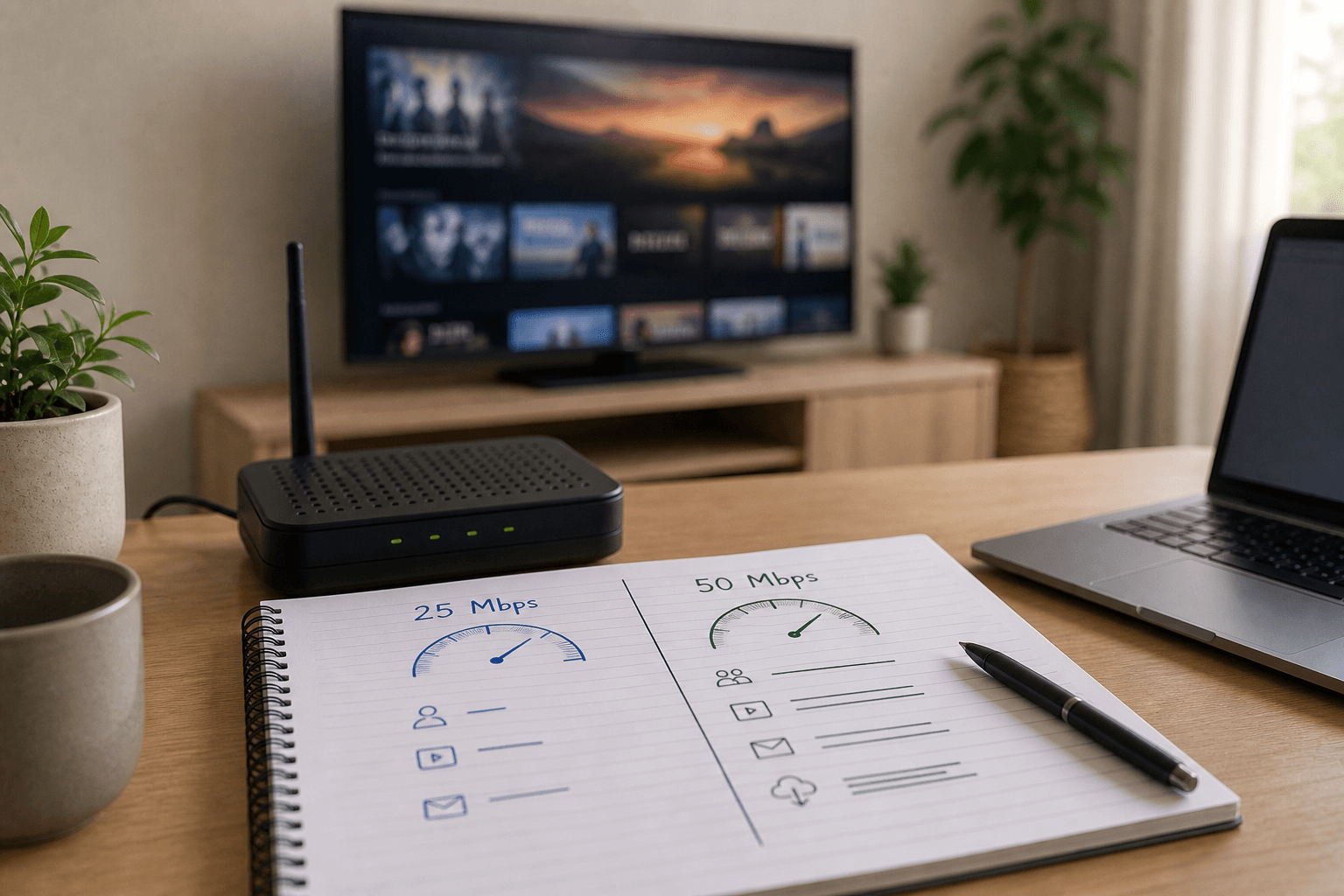
NBN 25 vs NBN 50 is one of the most common internet decisions in Australia because both sit in the range where people want decent value without paying for speed they do not need. The gap between them is not just about a bigger number. It is about how much flexibility your household has when several devices are active.
What is the practical difference?
The simplest difference is capacity. NBN 25 gives less room for overlapping activity than NBN 50. Current provider tier descriptions commonly frame NBN 25 for one or two lighter users, while NBN 50 is usually positioned as a more comfortable shared-household tier.
That does not mean NBN 25 is bad. It means it is less forgiving.
When NBN 25 can still be enough
NBN 25 can still make sense if your home is relatively quiet online. Examples include:
- one or two people mainly browsing, emailing and streaming casually;
- a smaller household that rarely overlaps heavy use;
- a user who wants to minimise plan cost and accepts less headroom.
If you mostly use the internet one person at a time, NBN 25 may be workable.
When NBN 50 is the better fit
NBN 50 is usually easier to recommend when there is more than one serious user in the home. It is often better for:
- overlapping HD or 4K streaming;
- regular work-from-home usage;
- gaming while someone else streams or downloads;
- homes that want fewer slowdowns at night.
Current provider plan pages commonly describe NBN 50 as suitable for a couple of active users or devices streaming, gaming and working online at once. That is a useful shorthand, even though every home behaves differently.
What about gaming?
Gaming is often misunderstood in speed comparisons. Online gaming usually does not need huge download speed on its own. Latency, stability and packet loss matter more. The ACCC's Measuring Broadband Australia material highlights how latency and packet loss can affect video conferencing, media streaming and online gaming.
So if you are a solo gamer in a quiet home, NBN 25 may still be enough. If gaming happens while others stream, call, or update devices, NBN 50 becomes more attractive.
Evening use is where the gap shows up
The difference between NBN 25 and NBN 50 often becomes obvious during busy evening windows. ACCC performance reporting uses busy-hour views around 7pm to 11pm because that is when households tend to feel pressure most clearly.
That makes NBN 50 a stronger choice if your household is active after work or school.
Common mistakes
A common mistake is assuming one Netflix stream or one console means you need a faster plan. Another is the opposite: focusing only on one user's needs and ignoring what happens when everyone gets online at once. The second mistake is usually why households outgrow NBN 25.
A simple decision rule
Choose NBN 25 if your home is light-use and budget-sensitive.
Choose NBN 50 if your home has overlapping users, regular evening activity, remote work, or you simply want less friction.
Sources and methodology
This guide uses current ACCC broadband performance guidance, nbn connection-type context and current provider tier descriptions. It focuses on practical fit rather than price because internet offers move regularly.
Where should you go next?
FAQs
Is NBN 25 enough for Netflix and browsing?
Often yes, especially for one or two lighter users. It becomes less comfortable when multiple people stream or work online at the same time.
Is NBN 50 worth it over NBN 25?
Usually yes for shared households, work-from-home use or homes that want more breathing room at busy times.
Do gamers need NBN 50 instead of NBN 25?
Not always. Solo gaming can work on NBN 25, but NBN 50 is safer when gaming overlaps with other heavy household use.
Will NBN 50 fix poor WiFi?
No. A weak router, bad placement or interference can make both plans feel slower than they should.
What is the better default choice for a couple?
If both people use the internet actively at the same time, NBN 50 is usually the stronger default.