
Peak, Off-Peak And Shoulder Electricity Explained
A practical guide to peak, off-peak and shoulder electricity periods and what they mean for time-of-use pricing.
CompareUs Editorial TeamConsumer utilities editorial team
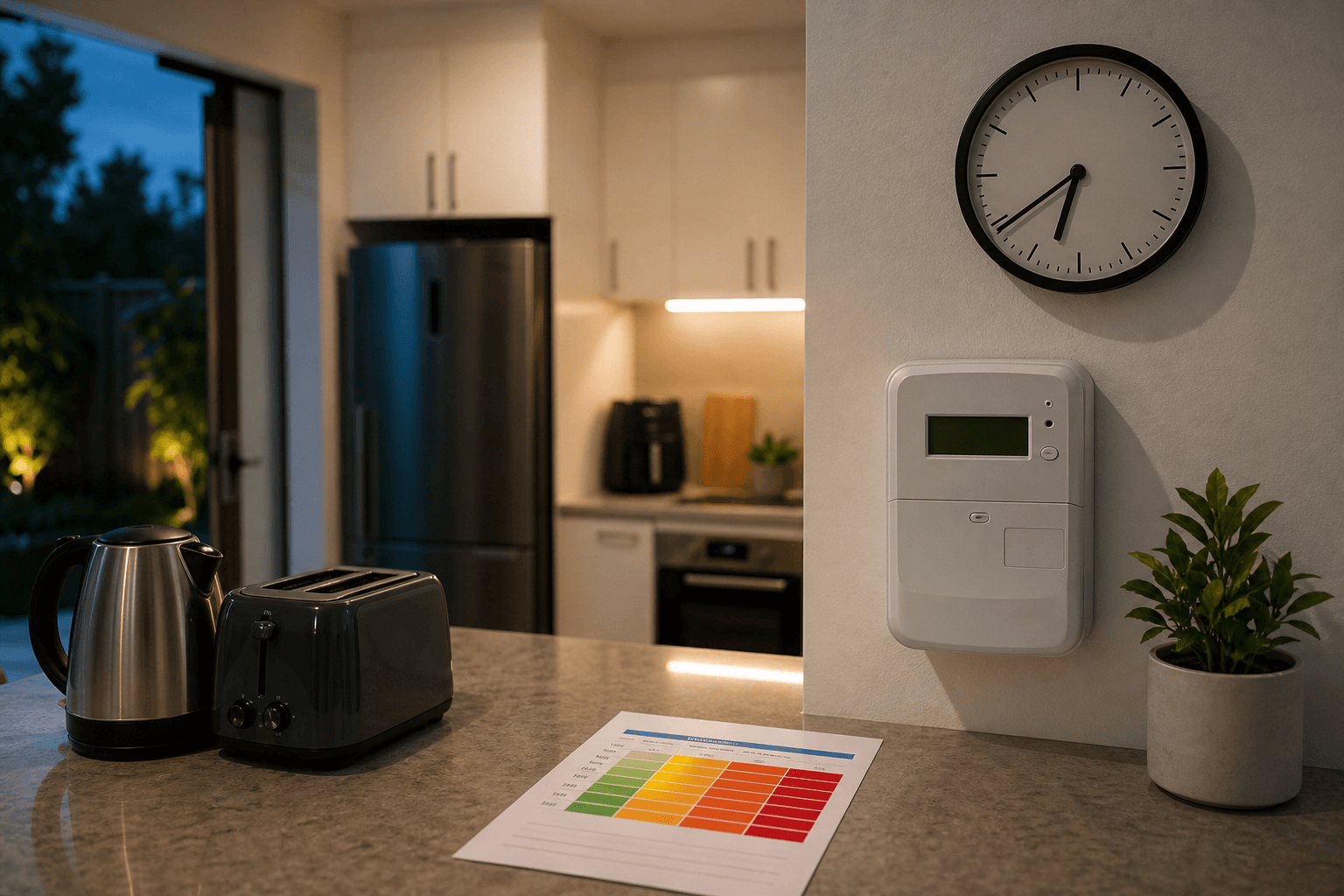
If your bill shows multiple usage rates, you may be on a time-of-use tariff. That usually means electricity is charged differently during peak, off-peak and sometimes shoulder periods. Understanding those time windows is essential if you want to know whether your tariff helps or hurts your bill.
What do peak, off-peak and shoulder mean?
Peak periods are usually the most expensive times to use electricity because they align with stronger demand on the network. Off-peak periods are the cheapest. Shoulder periods sit between the two.
Energy Made Easy explains that the exact hours depend on the retailer and plan. That is why one of the most common mistakes is assuming all peak or off-peak windows are the same across Australia.
Typical timing patterns in Australia
While every plan is different, Energy Made Easy notes that:
- peak periods are often weekday evenings;
- off-peak periods are often overnight and may include weekends;
- shoulder periods can apply between peak and off-peak windows.
These are broad patterns, not guaranteed national rules.
Why the exact times matter
A time-of-use tariff only works in your favour if your home can shift enough usage into cheaper periods. If most of your usage happens during evening peak windows, a time-based tariff may cost more than a single rate tariff even when the off-peak rate looks attractive.
What kinds of usage can be shifted?
Households often shift:
- dishwasher cycles;
- washing machine and dryer use;
- pool pump operation;
- EV charging;
- some water heating or battery charging setups.
The ability to shift usage matters more than the label on the tariff.
Who should be careful with time-of-use pricing?
Homes with heavy evening electricity demand should be cautious. That includes households that cook with electricity, use heating or cooling after work, and run several appliances in the early evening. Those homes may end up paying more during peak periods.
How to compare properly
Use your current bill and review the plan document for the exact usage windows. Then compare:
- the peak rate;
- the off-peak rate;
- the shoulder rate if applicable;
- the daily supply charge;
- any controlled load or demand component.
A cheaper off-peak rate does not help much if most of your electricity is used during the most expensive period.
Common mistake
The most common mistake is searching for generic peak off peak electricity times and assuming those hours apply to your plan. They may not. Always confirm the current hours in the Basic Plan Information or retailer tariff summary.
Sources and methodology
This guide is based on Energy Made Easy tariff guidance current at the time of writing. Specific time windows vary by retailer, plan and local network conditions.
Where should you go next?
FAQs
Are peak and off-peak times the same across Australia?
No. They vary by retailer, distributor, plan and meter setup.
What does shoulder electricity mean?
Shoulder is a mid-priced time period that sits between peak and off-peak usage rates.
Can time-of-use tariffs save money?
Yes, but mainly for households that can move enough usage into cheaper periods.
Why is my evening electricity more expensive?
If you are on a time-of-use tariff, your plan may treat that period as peak, which usually carries the highest rate.
How do I check my plan's exact peak times?
Check your retailer's current plan document or tariff summary for your address.