
Replacing gas heating with reverse-cycle air conditioning
Compare split and ducted options for replacing gas heating. Work through room coverage, cold-weather performance, installation costs and your winter energy bill.
CompareUs Editorial TeamEnergy guides
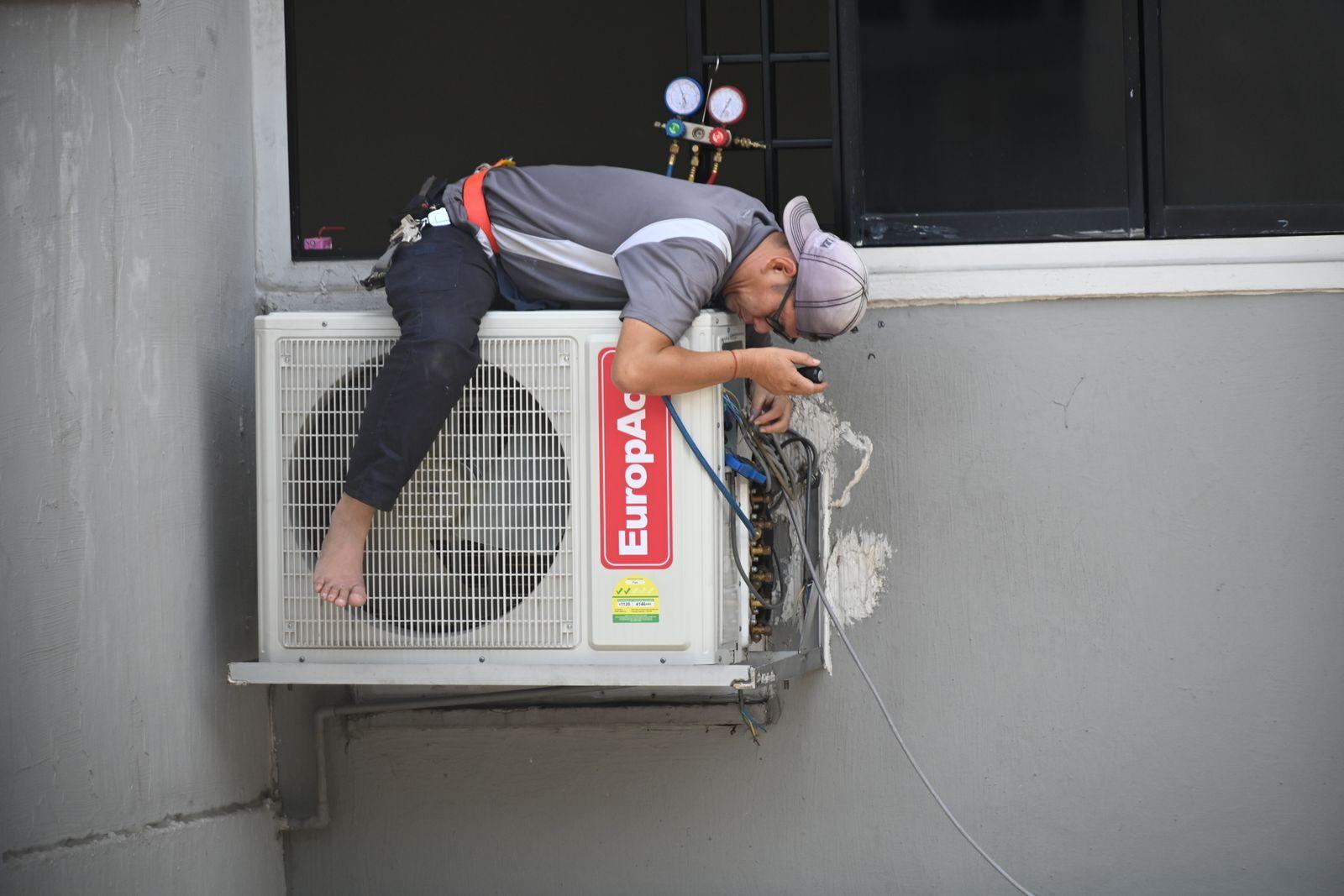
If your ducted gas heater failed tomorrow, which rooms would you miss heating first? The answer may be the living room at breakfast, a home office through the day and two bedrooms at night. That pattern is a better starting point for a replacement quote than asking for an electric appliance with the same number printed on your old heater.
Can reverse-cycle air conditioning replace gas heating?
Reverse-cycle air conditioning can replace gas heating if it is sized and installed for the rooms and climate you need to heat. Compare quotes for the same comfort level, then calculate operating cost using delivered heat, local tariffs and realistic winter use.
Describe the winter you want the new system to handle
Give the installer a simple floor plan. Mark where people sit, sleep and work, which doors stay shut and where the house has large windows or high ceilings. Note the coldest room you actually need to heat. A lounge that opens to a stairwell can lose warm air upwards, while a well-insulated bedroom with a closed door can maintain its temperature with relatively little heat. Identical floor areas can require different designs.
Think about the first hour of the morning as well as the middle of the day. A person working from home might want just one room comfortable for eight hours. A family getting children ready for school might need several rooms warmed quickly for a short period. Ask how the proposed equipment performs in each situation. The Australian Government's YourHome heating and cooling guide explains how climate, building design and lifestyle affect system choice.
Compare three layouts on equal terms
A single split system has an indoor unit serving a particular space and an outdoor unit. It is worth pricing if the gas heater already serves one main room, or if there is a large open living area and the rest of the home needs little heating. Ask how far warmth is expected to carry with doors in their normal positions. A salesperson standing in an empty hallway with all doors open may have a different impression from a shift worker trying to warm a closed bedroom.
Several individual splits allow different rooms to operate independently and may let you stage the project. They also require suitable locations for each outdoor unit. A multi-split connects several indoor units to one outdoor unit. Check what capacity is available when several rooms call for heat together. The nominal ratings of all indoor heads added together do not establish the simultaneous output of the outdoor unit.
Ask what can actually be reused
Existing registers are evidence that air once travelled to a room. They do not establish that the old duct sizes, insulation, layout and return-air path meet the new design. Ask the contractor to identify the parts they inspected and the parts they have allowed to replace. If an area was inaccessible during the quote, ask what would trigger a variation and how approval will be sought before extra work proceeds.
Floor outlets can suit one house while ceiling outlets work better in another. Ask where supply air will enter each occupied room, how it will return and whether new penetrations or surface repairs are included. In a house with two storeys, ask how the upstairs and downstairs sensors will respond on a cold sunny afternoon. A warm landing can satisfy a poorly positioned sensor while the room you care about remains chilly.
Read heating performance for your climate
Cooling capacity often dominates shop displays. For a gas-heating replacement, look at heating capacity and efficiency at the outdoor temperatures that matter where you live. A heat pump moves heat and uses electricity to do so. The heat it delivers and electrical input it draws are different quantities. Multiplying the advertised heating output by your electricity tariff as though it were consumption will overstate the electricity bill.
Where a Zoned Energy Rating Label is available, use the heating information in the appropriate climate zone and compare models of similar size. The label reflects standardised conditions. It lets you compare products but cannot predict exactly how long your doors will stay open or what temperature your household will select. For equipment without a comparable displayed label, request manufacturer performance data and the assumptions behind the installer's estimate. See the government's Zoned Energy Rating Label explanation.
Calculate the cost of delivering the same heat
One useful comparison prices a fixed amount of heat delivered to the rooms. Suppose your household needs 30 kWh of useful heat on an illustrative winter day. At an assumed overall gas heating efficiency of 75%, the gas system needs 40 kWh of fuel energy. Since 1 kWh equals 3.6 MJ, that is 144 MJ of gas. At an assumed marginal rate of 3 cents per MJ, the fuel costs $4.32 for the day, before supply charges and any fan electricity.
Suppose the electric system delivers an average of three units of useful room heat for each unit of electricity over the same period. It would need 10 kWh of electricity. At 32 cents per kWh, that is $3.20. At 45 cents per kWh it is $4.50. The result changes direction simply by changing the electricity price. These hypothetical assumptions are not ratings for an actual heater or a forecast for a particular address. If using a unit's rated efficiency, allow separately for duct losses and differences between test conditions and actual use.
| Heating option | Energy bought | Assumed price | Illustrative cost |
|---|---|---|---|
| Gas at 75% overall efficiency | 144 MJ | $0.03/MJ | $4.32 |
| Reverse-cycle at average COP 3 | 10 kWh | $0.32/kWh | $3.20 |
| Reverse-cycle at average COP 3 | 10 kWh | $0.45/kWh | $4.50 |
Repeat the calculation for your ordinary heating hours. If most heating is purchased on winter evenings, a cheap overnight electricity rate may have little impact. If rooftop solar supplies some daytime heating, distinguish electricity bought from the grid from solar electricity that could otherwise earn an export credit. Do not assume summer solar production describes a cloudy winter week. For help reading the gas side of the comparison, see our gas heating running-cost guide.
General information only, not financial, legal, medical or electrical advice.
CompareUs may receive referral fees. How we get paid.
Estimate the annual bill change from records you already have
Use a full year of gas bills and identify what else remains on gas. A summer bill can offer a rough baseline for cooking and hot water, but winter hot water use can change too. Adjust for billing days before comparing seasons. If gas consumption averaged 18 MJ per day in summer and 85 MJ in winter, the difference of 67 MJ is a starting point for investigating space heating. It is not proof that every extra megajoule went into the heater.
Keep the daily gas supply charge separate. If you retain a gas cooktop or water heater, replacing the heater alone generally leaves you paying for a connected gas service. If heating was the final gas use, ask about the procedure and costs for ending that service before counting a full year of avoided charges. Our home electrification cost guide shows how to allocate shared costs across several appliance replacements.
Compare the amount you must pay with the extra investment
If the old gas heater needs urgent replacement, compare the proposed electric system with the lawful, practical alternatives at your property. Suppose an electric installation is quoted at $8,200 and a suitable alternative at $5,200, both after confirmed incentives and including removal. You need $8,200 to pay for the electric project. The additional investment compared with that alternative is $3,000. With an assumed annual saving of $400, simple recovery of the difference takes seven and a half years before maintenance, financing or tariff changes.
From accepted quote to the first winter bill
Get the exact indoor and outdoor model numbers, heating design, electrical scope and removal arrangements on the accepted quote. Confirm who handles gas isolation, who commissions the system and who to contact about workmanship. In Victoria, eligible replacements may attract an upfront discount through participating providers. Check the current Victorian heating and cooling discount rules before authorising work. Other jurisdictions have their own conditions; our air conditioner rebates guide gives a starting point.
At handover, ask the installer to demonstrate heating mode, schedules, zoning and filter access. Try the controls yourself while they are there. Ask what routine cleaning is safe for the householder, what needs professional servicing and where to find the warranty details. Keep the schedule simple for the first few weeks so you can tell whether a cold room results from a timing setting, a closed zone or the equipment's performance.
Check the first winter bill against both weather and actual occupancy. A family that now warms two bedrooms every night has changed the heating service as well as the fuel. Record any rooms that still fail to reach a comfortable temperature, along with the outdoor conditions and active zones. Those observations give the installer a specific issue to investigate and give you better evidence than a single monthly dollar total.
Questions to ask
- Which rooms and winter conditions must the system cover?
- Does the quote include all electrical and building work?
- What is the expected winter efficiency?
- Will any gas account or supply charge remain?
Where should you go next?
FAQs
Can one split heat all the bedrooms?
That depends on the room layout and door positions. Ask for the expected coverage for each room in normal use.
Can old gas ducts be reused?
Have a contractor inspect the ductwork and return-air path against the new design and specify reusable parts in writing.
Does a 7 kW heating rating mean 7 kW of electricity use?
The rating describes heat delivered. Use electrical input and expected operating conditions when calculating consumption.
Will my gas supply charge disappear?
Check what gas appliances remain and how the account and connection will be handled. Include avoided supply charges only when the household will actually stop paying them.
Should I include summer cooling in the budget?
Yes. Price any new cooling use separately so you can see both the winter heating comparison and the full annual household cost.