
Starlink vs Sky Muster Plus Premium for Regional Australia
A regional and remote household comparison of low-earth-orbit Starlink and NBN Sky Muster Plus Premium satellite internet.
Sancia PereiraEnergy Markets Analyst
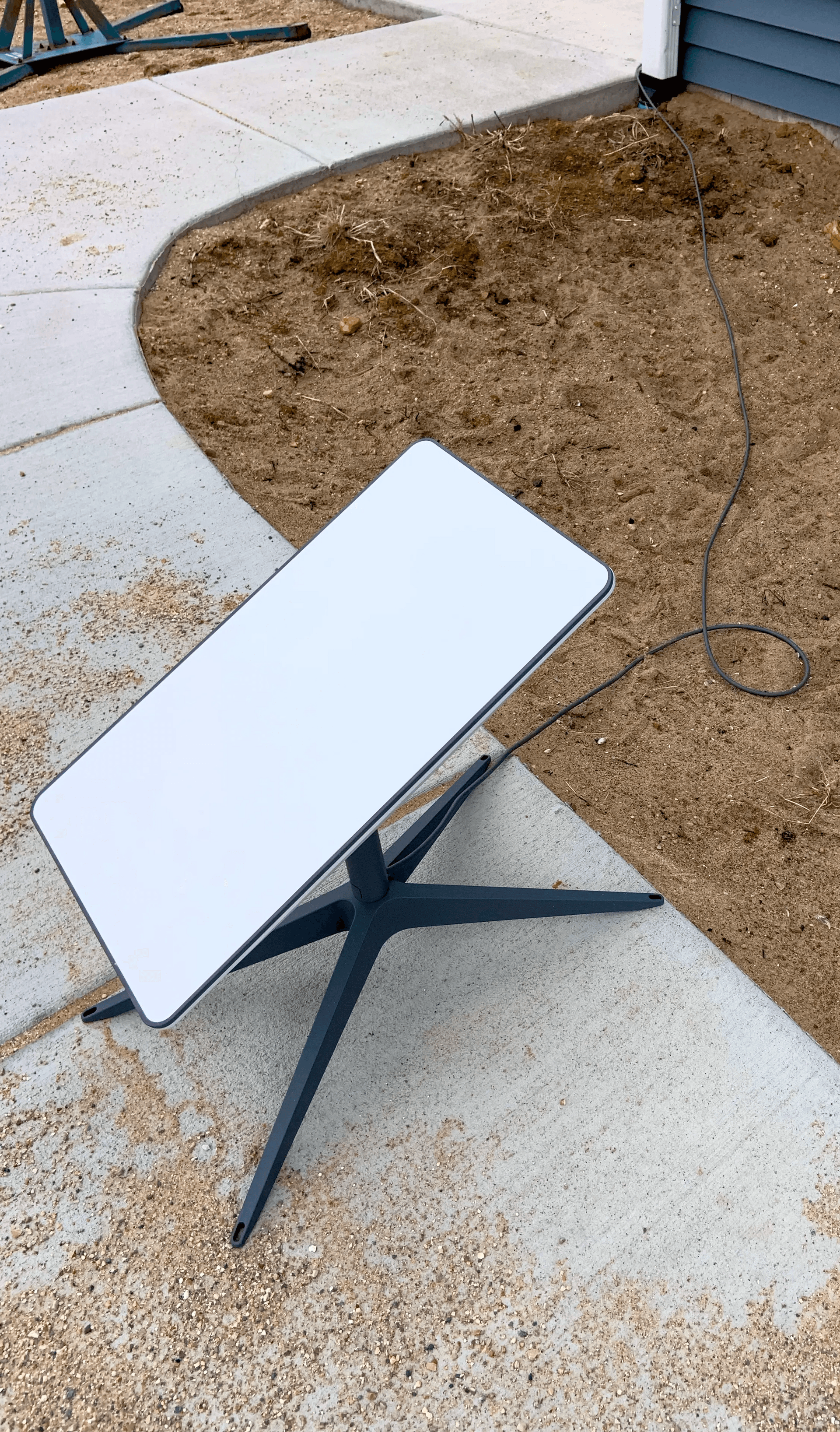
Starlink vs Sky Muster Plus Premium compares satellite services with very different performance profiles. Starlink uses a large low-earth-orbit constellation, while NBN Sky Muster uses geostationary satellites and is delivered through retail service providers to eligible premises. That orbital difference affects latency, but the household decision also depends on eligibility, installation, equipment ownership, data policy, price and support.
Quick answer
Starlink may appeal where lower latency and higher burst speed justify its equipment and service costs. Sky Muster Plus Premium can suit eligible regional households wanting an NBN-supported service with its current uncapped-usage design and retailer choice. Check current address eligibility, complete installed cost, fair-use or network-management rules, sky view, support and measured performance before choosing.
Key points
- Sky Muster eligibility is address-based within the NBN footprint and ordered through a retail provider.
- Sky Muster Plus Premium currently allows uncapped use of online activities, subject to fair-use and shaping rules.
- Low-earth-orbit satellites generally reduce the propagation delay compared with geostationary satellite.
- Both options need a suitable view of the sky and mains-powered equipment.
- Prices and plan policies change, so dated provider documents belong in the comparison.
Starlink vs Sky Muster Plus Premium architectures
NBN Sky Muster uses two geostationary satellites positioned far above Australia. The dish communicates with a satellite that appears fixed in the sky, creating an inherently longer signal path. NBN supplies wholesale access and approved retail providers sell plans and customer support. Sky Muster Plus Premium is the current higher-usage product described by NBN for eligible households.
Starlink terminals track a moving network of satellites in low Earth orbit through an electronically steered dish. The shorter path can improve latency and support different speed behaviour, while the terminal needs a broad unobstructed view and uses Starlink's own service ecosystem. Neither design removes congestion, weather, power or installation considerations.
| Issue | Starlink | Sky Muster Plus Premium |
|---|---|---|
| Orbit | Low Earth orbit constellation | Geostationary NBN satellites |
| Eligibility | Service-address availability | Eligible NBN satellite premises |
| Equipment | Starlink kit and terms | NBN satellite installation/equipment process |
| Data | Plan-specific policy | Uncapped activities subject to fair use/shaping |
| Provider | Starlink service | Choice of participating retail providers |
What matters most when comparing your options
Eligibility and property view
Check both services at the exact address and survey an unobstructed, safe dish location with the provider's tools or installer. Trees, terrain, roof structures and body-corporate rules can make an advertised regional service impractical at a particular property.
A useful test is to ask: Can the dish maintain the required sky view year-round as vegetation grows and weather changes? Write the answer down in the same units for every option. That small discipline prevents a prominent headline, introductory discount or theoretical maximum from crowding out the detail that will shape the household's real result.
Performance for real applications
Compare busy-time download and upload, latency, brief dropouts and any traffic management for calls, gaming, telehealth and cloud work. Satellite speed tests can look strong while latency or interruptions remain the limiting factor for interactive applications.
A useful test is to ask: Which critical application has the tightest latency or stability requirement, and has it been tested locally? Write the answer down in the same units for every option. That small discipline prevents a prominent headline, introductory discount or theoretical maximum from crowding out the detail that will shape the household's real result.
Installed and ongoing cost
Add hardware purchase or rental, freight, mounting, non-standard installation, plan price, repair responsibility and cancellation. Remote properties can face installation work beyond the advertised kit, and ownership determines who pays when equipment fails.
A useful test is to ask: What is the 24-month cost for a compliant permanent installation, including hardware risk? Write the answer down in the same units for every option. That small discipline prevents a prominent headline, introductory discount or theoretical maximum from crowding out the detail that will shape the household's real result.
Data and network management
Read the current fair-use, shaping, priority and acceptable-use terms rather than relying on the word unlimited or uncapped. Policies can affect high-volume users and may manage congestion differently across times, activities or plan classes.
A useful test is to ask: Can normal household use trigger slower treatment, and how clearly will the provider explain it? Write the answer down in the same units for every option. That small discipline prevents a prominent headline, introductory discount or theoretical maximum from crowding out the detail that will shape the household's real result.
Latency, speed and remote work
Geostationary satellite signals travel a much longer distance, so latency remains a physical constraint even when download throughput improves. Sky Muster Plus Premium can still support browsing, streaming and many calls, but users should set realistic expectations for fast-action gaming or highly interactive remote systems. Starlink's lower orbit often improves responsiveness, though local obstructions and network load can cause their own interruptions.
For work, test the actual VPN, voice platform and video settings. Upload speed can matter more than download for sending large files or maintaining several camera feeds. A local neighbour's recent experience can supplement provider information, but hardware generation, dish view and plan class must be comparable before treating it as evidence.
Installation and resilience
A permanent satellite installation must account for wind rating, cable entry, earthing, roof access and a clear view. Obtain permission for a rental or strata property. Avoid an improvised location that is easy to reach but repeatedly obstructed. Confirm whether professional installation is included and who is authorised to move or repair provider-owned equipment.
Both services need electricity at the premises. A UPS may keep local equipment alive for a time, but it cannot guarantee the provider network or wider power system. Remote households should keep an independent emergency communications method appropriate to their circumstances and should not treat a consumer satellite plan as a sole life-safety service.
Checking alternatives before satellite
Recheck Fixed Wireless NBN eligibility because the upgraded footprint and tiers may have changed since an earlier enquiry. Also test mobile home internet at the exact address, including external-antenna options where supported. A terrestrial service can offer simpler installation or different latency, but availability and capacity remain local.
If satellite is still the practical answer, compare retail support as well as technology. Sky Muster providers can differ in price and service arrangements; Starlink centralises more of the relationship. Read fault, replacement and cancellation processes with the same care as speed claims, particularly where a failed service affects work or education.
Which option suits which household?
There is no universally best choice. The stronger option is the one that fits the household's location, equipment, usage pattern, appetite for complexity and likely behaviour after any introductory period. These scenarios are a decision aid, not a product ranking.
| Household or situation | Likely starting point | Why |
|---|---|---|
| Latency-sensitive remote professional | Test Starlink first | Lower-orbit architecture may better suit interactive work if installation and cost are acceptable. |
| Eligible household prioritising NBN framework | Compare Sky Muster Plus Premium RSPs | Retailer choice and current uncapped activity settings may suit ordinary use. |
| Heavily treed property | Survey before ordering | Obstructions can undermine either dish regardless of plan value. |
| Address newly covered by Fixed Wireless | Compare terrestrial NBN | An upgraded fixed wireless service may avoid satellite trade-offs. |
A practical comparison process
Use the same assumptions for every option and keep a copy of the plan summary, Critical Information Summary or offer terms you relied on. Online prices and eligibility settings change; a dated record makes it much easier to check the first bill or challenge a mismatch.
- Recheck NBN technology and mobile alternatives at the exact address.
- Confirm Starlink and Sky Muster eligibility and dish-location feasibility.
- List critical applications and their latency, upload and continuity needs.
- Calculate equipment, installation and service cost over two years.
- Read current fair-use, shaping, fault and cancellation terms.
- Keep a separate emergency communication plan for remote outages.
Common mistakes to avoid
- Comparing only the highest advertised download speed.
- Ordering before checking trees, roof access and landlord approval.
- Calling an uncapped plan entirely unrestricted.
- Ignoring upload and brief dropouts for work applications.
- Assuming battery backup guarantees the satellite network remains online.
The comparison should end with a defensible household decision, not the longest feature list. Recheck one-off costs, ongoing charges, speed or export constraints, cancellation conditions and what happens after a promotion. When two options remain close, favour the one whose conditions you understand and can realistically manage.
Bottom line
Starlink and Sky Muster Plus Premium solve the same geographic problem through different networks. Decide from application performance, installed cost, current data policy and support—not loyalty to a satellite label. Review Fixed Wireless NBN and current internet plans before committing.
Related CompareUs resources
Sources and editorial method
CompareUs reviewed current Australian regulator, government, network and provider material available on 28 July 2026. Product examples are included to explain how offers work, not as an endorsement or a permanent price promise. Check the provider's current terms and your address-specific eligibility before acting.
- nbn — Sky Muster explained — satellite network and premises information
- nbn — Sky Muster Plus Premium — current plan design, fair use and shaping
- nbn — Fixed Wireless explained — network technology and upgrade information
Where should you go next?
FAQs
Is Starlink faster than Sky Muster Plus Premium?
Starlink may offer higher speeds and lower latency in many cases, but actual results vary. Compare current plan information and local testing.
Is Sky Muster Plus Premium unlimited?
NBN describes online activities as uncapped, subject to its fair-use and shaping rules. Read the current policy and retailer terms.
Can every regional property get Sky Muster?
Eligibility depends on the NBN address classification and available technology. Check the exact premises.
Do I own satellite equipment?
Ownership and responsibility differ by service. Read the order and equipment terms before installation or moving.
Which satellite internet is better for gaming?
Lower latency generally helps, giving low-earth-orbit service an architectural advantage, but local stability and the specific game still need testing.
Will satellite internet work in a power outage?
The dish and router need power, and provider infrastructure may also be affected. Local backup power does not guarantee end-to-end service.