
Washing Machine Running Costs: Calculate Your Cost per Wash
Calculate washing machine running costs from energy use, wash frequency and your tariff. Compare cold and warm cycles, water charges and drying costs clearly.
CompareUs Editorial TeamConsumer utilities editorial team
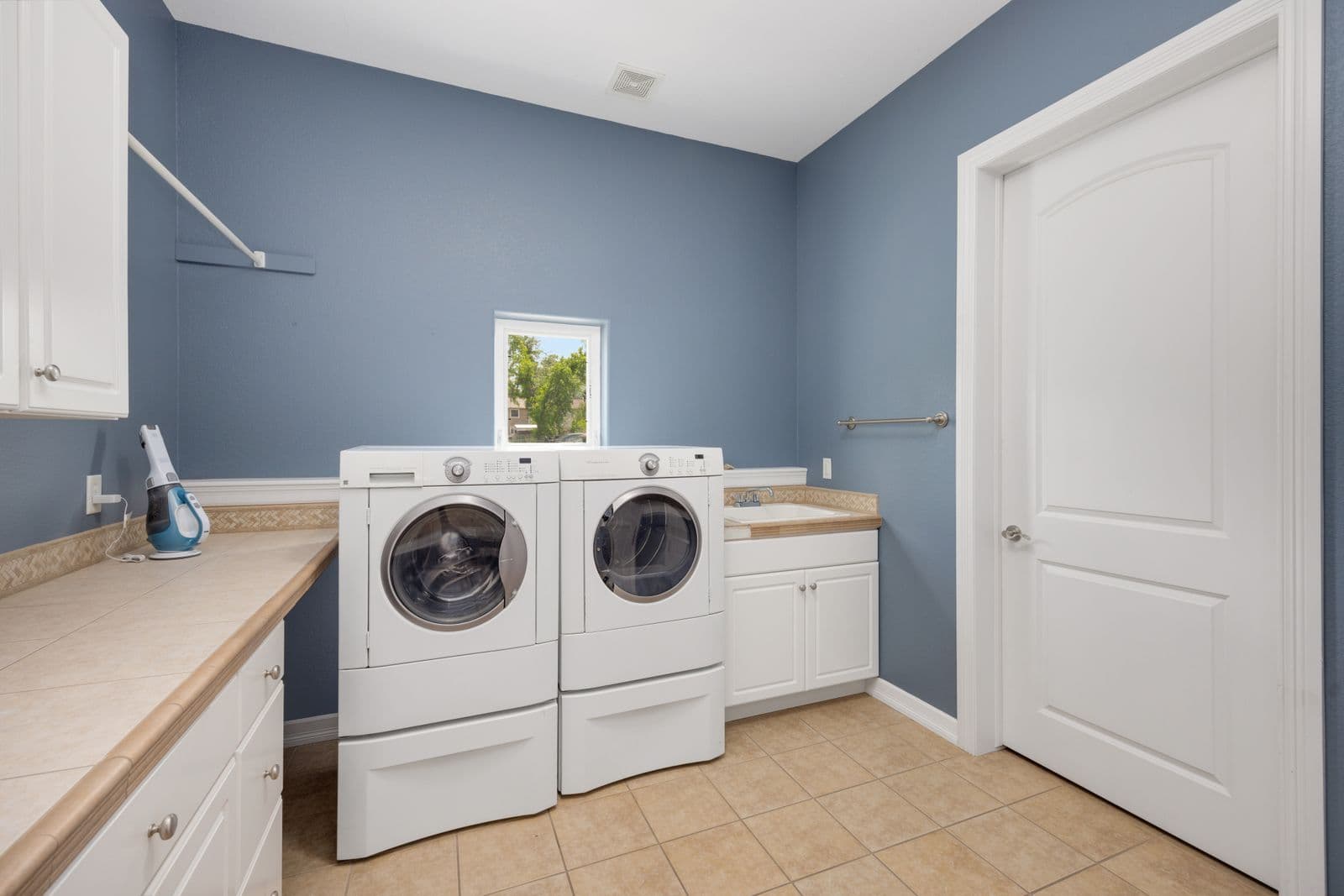
Washing machine running costs are easiest to understand when you separate the wash from the rest of the laundry routine. The machine uses electricity, but hot water may come from another appliance and drying may cost more than expected. A cost-per-wash estimate is useful only when you know which of those costs it includes.
Quick answer
Estimate washing machine running costs using electricity per wash, your tariff and the number of washes you do. The Australian energy label provides a standardised comparison, not a personalised bill forecast. Check the tested program, account separately for external hot-water heating where relevant, and include water and drying when comparing the wider cost of laundry.
Washing machine running costs: start with the right units
Electricity is charged in kilowatt hours, or kWh. The power rating in watts tells you something about demand at a moment, not the energy consumed across a complete wash. Heating, turning the drum, pumping and waiting do not necessarily draw the same power.
Use energy per cycle from the manufacturer’s program information where available. Alternatively, start with the Australian Energy Rating Label for a standardised comparison between similar machines. Do not multiply the maximum wattage on the appliance by the whole program duration and assume that is the billable consumption.
Write down your electricity usage rate in dollars per kWh. A rate of 32 cents becomes $0.32 in the calculation. Forgetting this conversion can produce a result one hundred times too large.
What the Australian energy label assumes
The government’s label guide describes clothes-washer energy consumption using seven warm washes per week and standby. It also explains that actual use can differ from the test conditions. Check the program and assumptions on the specific label rather than assuming every wash in your home matches the test.
If a hypothetical label shows 260 kWh a year, dividing by 365 gives roughly 0.71 kWh per assumed daily wash allocation. That figure includes the way standby is represented in the annual test; it is not a laboratory measurement of your favourite 30-minute program.
For a machine used only twice a week, simply scaling the whole annual label down can also distort the standby component. Treat it as an initial comparison. Manufacturer cycle data and measurements taken under your own routine can give a more tailored estimate.
A worked electricity example
Suppose a particular wash uses 0.60 kWh, your applicable rate is $0.32 per kWh and you run five washes a week. These are hypothetical inputs, not an Australian average or a recommendation for a particular machine.
| Calculation | Result |
|---|---|
| One wash: 0.60 kWh × $0.32 | $0.192, about 19 cents |
| Weekly: five washes × $0.192 | $0.96 |
| Annual: 52 weeks × $0.96 | $49.92 |
| Annual electricity use: 0.60 × 5 × 52 | 156 kWh |
This estimate excludes standby outside the measured cycle, water, detergent and any separate drying. Keep those boundaries visible when comparing your result with an online “cost of laundry” figure that may include more items.
If the same cycle used electricity entirely at a hypothetical 20-cent off-peak rate, its electricity cost would be 12 cents. The difference is 7.2 cents per wash, or $18.72 across 260 washes. Small changes can add up, but the arithmetic is a better guide than a dramatic percentage alone.
Cold and warm programs
Heating water is an important difference between programs. YourHome’s washing-machine guidance recommends considering cold-wash options and checking program information in the manual. The suitable choice still depends on the fabric, soil level and hygiene requirements; a savings estimate is not a substitute for those instructions.
Do not assume “quick” means “lowest energy”. A shorter program might use different temperatures, load limits or cleaning action. Compare kWh for the actual programs you use, not just minutes on the display. If the manufacturer does not publish comparable figures, acknowledge that uncertainty rather than assigning a guessed percentage saving.
A practical household test is to record program, load type and energy use for several comparable washes. Keep the cleaning outcome in the comparison. A cheaper cycle that needs to be repeated may not save either energy or water.
Account for externally heated water
Some machines heat cold water internally; others can draw from a household hot-water supply. A plug-in electricity measurement of the washer cannot see gas or electricity used by a separate water heater. This can make one machine appear cheaper if part of its energy use is simply recorded elsewhere.
Before adding a hot-water allowance to an energy-label estimate, check what that label or manufacturer figure already includes. Otherwise you risk counting heating twice. For a whole-laundry budget, define the boundary as washer electricity plus any external water-heating energy not already counted.
The cost of that external heat depends on your water-heating system, tariff, losses and water temperature. Avoid applying an electric-resistance assumption to a heat pump or gas system. Our gas cost calculator can help with gas-unit budgeting, but it does not establish how much hot water a particular wash uses.
Add water and detergent separately
Water labels and energy labels measure different things. YourHome explains that the WELS label includes water use per load for clothes washers. Use litres for the relevant program, convert to kilolitres where needed and apply the variable charges that genuinely change with consumption on your water bill.
For a hypothetical 50-litre wash and a variable water charge of $3 per kilolitre, the water component is 0.05 × $3, or 15 cents. Add any usage-linked wastewater charge that applies locally. Do not spread a fixed quarterly service charge into an “extra wash” cost unless you are deliberately allocating total household overheads.
Detergent can be another separate line. Divide the purchase price by the number of correctly dosed washes, not a pack’s optimistic maximum if you routinely use more. Follow dosing instructions; this guide does not suggest reducing detergent below what your load and product require.
The drying decision changes the total
A washing-only comparison can miss the cost of removing the remaining moisture. Higher spin settings may reduce subsequent drying needs where suitable for the fabric and machine. If you use a washer–dryer combination, distinguish its washing and drying ratings and capacities.
Do not assume the drying function can handle the same full load as the wash function. Follow the rated capacities and ventilation instructions. A separate dryer’s energy, or a combined machine’s drying cycle, belongs in its own line in your worksheet.
Air-drying where practical can avoid powered drying, but the right arrangement depends on space, weather and moisture management. The useful comparison is the complete routine that gets your clothes clean and dry, not a theoretical wash that ignores what happens afterwards.
Time-of-use tariffs and rooftop solar
If your tariff changes by time, a cycle spanning two periods may use electricity at more than one rate. The heating phase may not occur evenly across its duration. Use interval data where available or state the simplifying assumption behind your estimate.
With solar, the household may avoid imported electricity while giving up a feed-in credit for energy used onsite. That export value is an opportunity cost. A machine running in daylight can also import power when clouds pass or other appliances consume the available generation.
Use our electricity cost calculator for transparent inputs, and compare electricity plans across your whole household. Moving a few washes into a cheaper period does not guarantee that a plan with higher peak rates is better overall.
Compare two machines without overbuying
Choose the capacity and essential features first. Stars compare efficiency among suitably comparable appliances; a larger high-star machine can still use more total energy than a smaller model. Check the annual kWh number as well as the stars.
Suppose two suitable machines differ by $180 upfront and the more expensive option saves a hypothetical 70 kWh annually under your routine. At $0.32 per kWh, the simple annual electricity saving is $22.40 and the simple payback is about eight years. That excludes water, repairs, financing, tariff changes and differences in lifespan.
The result is a decision aid, not proof that either machine is the better purchase. Reliability, accessibility, available space and the ability to wash the loads you actually have can matter more than a small electricity difference.
A useful one-week laundry record
Record each wash’s program, temperature, approximate load and whether you used a dryer afterwards. Add energy readings only where they can be obtained safely with equipment appropriate for the appliance. Do not pull out a heavy machine, alter wiring or use an unsuitable adaptor to obtain a measurement.
At the end of the week, identify the biggest uncertainty. It might be external hot-water heating, an energy-intensive drying habit or simply an electricity rate copied incorrectly from the bill. Fix that input before refining tiny decimal differences in the result.
Sources and review
The CompareUs Editorial Team checked Australian Government Energy Rating and YourHome guidance on 28 September 2026. All dollar calculations here use clearly hypothetical inputs. Your appliance instructions and actual tariffs determine the estimate for your household.
Where should you go next?
FAQs
How much electricity does a washing machine use per wash?
It depends on the model, load and program. Use manufacturer cycle data or a properly measured cycle. The annual energy label can help compare machines, but includes a standard usage assumption and standby rather than your exact routine.
Does a longer wash always cost more?
No. Elapsed time alone does not show energy use. A longer program can use less heating or operate differently. Compare measured kilowatt hours for the programs, while following garment-care and machine instructions.
Can I divide the energy label by 365?
Only as a rough allocation after checking the label’s assumptions. The government describes clothes-washer testing as seven warm washes per week plus standby. Allocating the annual total does not isolate the exact electricity used in one wash.
Is cold washing always suitable?
No single program suits every load. Cold washing can reduce heating demand, but follow garment labels, detergent directions and relevant hygiene advice. Use the program appropriate to what you are washing.
Should I include the daily electricity supply charge?
Not in the marginal cost of one extra wash if you already pay it regardless. Include supply charges when comparing the total household bill or electricity plans.
Will solar make my washing free?
Not automatically. Consider the export credit forgone, whether enough solar is available, other household loads and any battery opportunity cost. Imported electricity can still be used during part of the cycle.