
Why Is My Electricity Bill Estimated?
A practical guide to estimated electricity bills, why they happen and how to respond if the amount looks off.
CompareUs Editorial TeamConsumer utilities editorial team
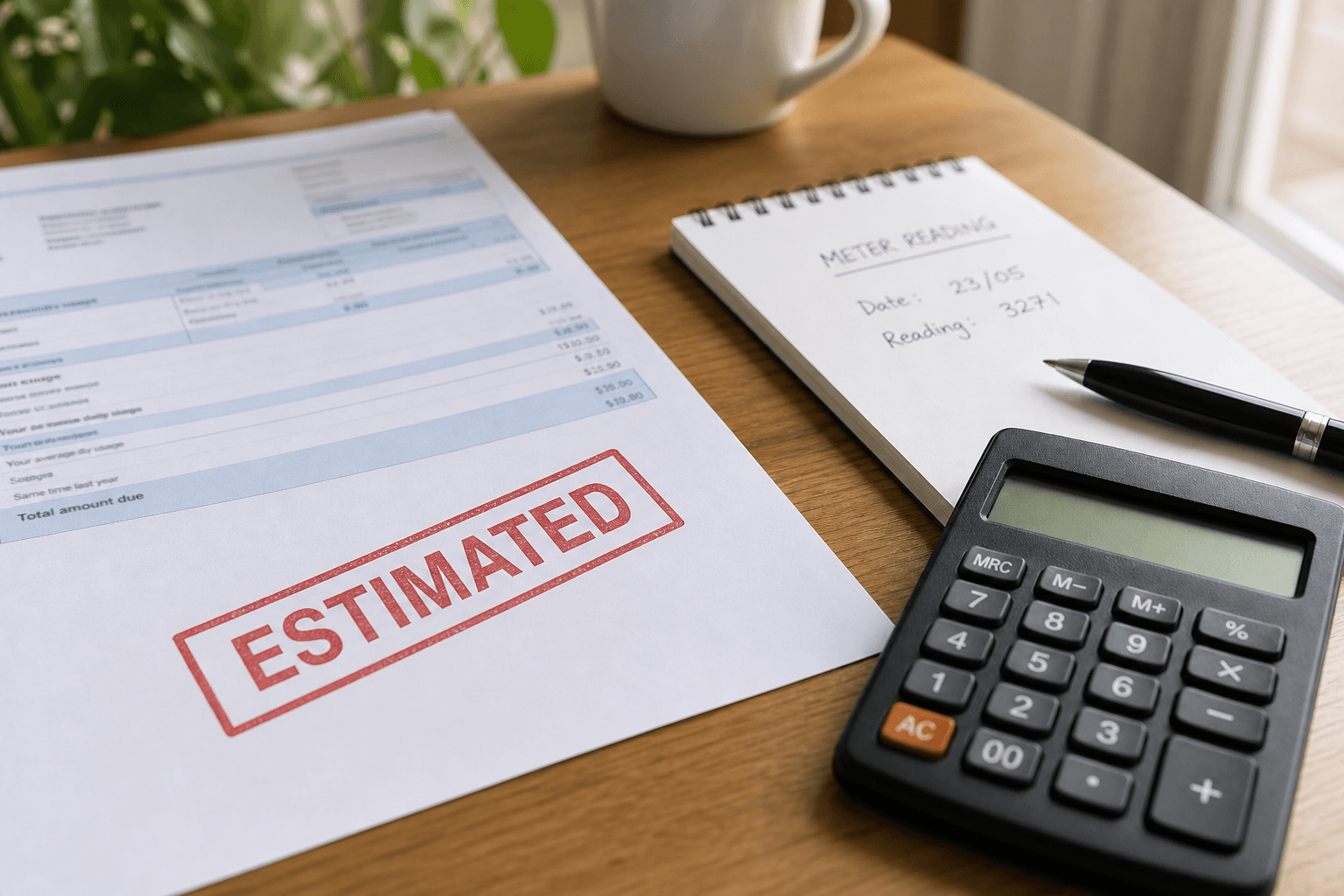
If your power bill seems higher or lower than expected, one of the first things to check is whether the reading was estimated. An estimated electricity bill is not the same as an actual read bill, and the reason for the estimate matters.
Why does an estimated electricity bill happen?
Energy Made Easy explains that a bill may be estimated when the meter cannot be read or when actual meter data is not available. Common reasons include:
- the meter was inaccessible or unsafe to access;
- the meter was faulty or broken;
- the relevant data was not available in time.
When a bill is estimated, the retailer or distributor may use previous usage history or another method to predict consumption.
How to tell if your bill is estimated
Retailers must clearly show when a bill is based on an estimate. Check the usage section, meter read notes or bill summary for wording that says the bill is estimated.
What should you do if the estimate looks wrong?
If the estimate appears too high or too low, contact your retailer promptly. Energy Made Easy notes that customers may be able to request an adjusted bill using their own meter reading before the due date. The process varies by retailer, so ask what evidence or steps are required.
Why estimated bills can matter later
An underestimated bill can create a catch-up problem later. When the next actual read happens, the difference may be added back in. An overestimated bill can also affect cash flow and make it harder to judge whether your plan is competitive.
Overcharging and undercharging rules
Energy Made Easy also explains some important billing protections.
If you were overcharged, smaller amounts may be credited on the next bill, while larger overcharges may be credited or refunded.
If you were undercharged, the amount you have to repay depends on the cause and the length of the undercharge period. Where the undercharge was the retailer's fault, customers are generally protected from having to repay more than the previous nine months. Repayment timeframes also depend on how long the undercharge lasted.
Common mistake
A common mistake is treating one estimated bill as proof that your household usage suddenly changed. Before drawing conclusions, confirm whether the reading was estimated and whether there were any access or meter issues.
How to protect yourself
Keep a copy of recent bills, check whether the latest read was actual or estimated, and contact your retailer early if something looks inconsistent. If the issue is unresolved, ask about the energy ombudsman in your state or territory.
Sources and methodology
This guide is based on Energy Made Easy consumer guidance current at the time of writing. Billing outcomes vary by retailer and circumstances, so use the official retailer and ombudsman process if a bill dispute continues.
Where should you go next?
FAQs
Why would my electricity bill be estimated?
Common reasons include no access to the meter, a faulty meter or missing usage data.
How do I know if my electricity bill is estimated?
Your bill should clearly say that the read or the bill is estimated.
Can I submit my own meter reading?
In some cases yes. Ask your retailer whether they accept a customer read and what timing applies.
What happens if I was undercharged?
Repayment rules depend on the cause and duration of the undercharge. Energy Made Easy outlines protections, including limits when the retailer was at fault.
What happens if I was overcharged?
The retailer may credit the next bill or provide a refund depending on the amount and circumstances.