
Fridge Running Cost: Calculate Annual Electricity Use
Estimate fridge running cost using annual kWh and your electricity tariff. Compare sizes, second fridges and replacement costs without relying on wattage alone.
CompareUs Editorial TeamConsumer utilities editorial team
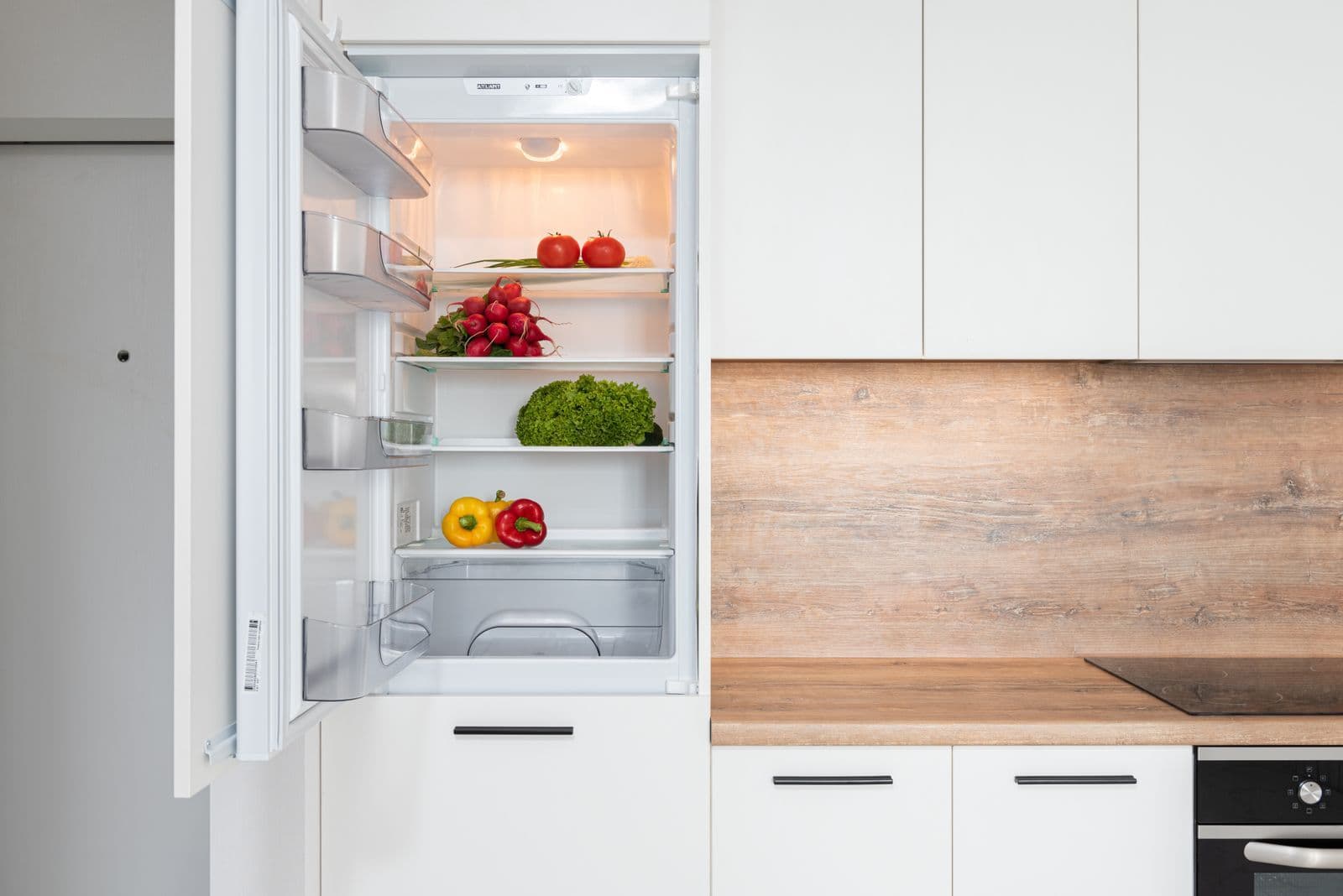
Fridge running cost is a quiet part of the electricity bill: the appliance stays available every day, but it does not draw its maximum power every minute. To estimate it properly, use energy consumed over time. That also gives you a sensible way to compare a replacement or decide whether a second fridge earns its place in the garage.
Quick answer
Estimate fridge running cost by multiplying its annual energy consumption in kilowatt hours by your electricity rate in dollars per kilowatt hour. Use the energy label or measured consumption, not the compressor’s maximum wattage multiplied by every hour of the year. Size, room temperature, condition and your tariff can change the result.
Calculate fridge running cost from annual kWh
Find the annual energy consumption figure on the Australian Energy Rating Label or the model’s registered information. Multiply it by your electricity usage rate expressed in dollars per kWh. The government’s label guide uses this approach to estimate running costs.
For a hypothetical model using 300 kWh annually at 32 cents per kWh, the calculation is 300 × $0.32 = $96 a year. Dividing by 12 gives an average of $8 a month. That monthly average does not mean the fridge consumes exactly the same energy in every season.
Keep the daily supply charge outside this appliance calculation if you would pay it regardless. When choosing an electricity plan, however, compare both usage and supply charges across the whole household. A lower fridge estimate is not a substitute for the complete bill comparison.
A simple sensitivity table
The table below shows invented consumption levels and tariffs so you can see how the inputs change the result. They are not typical-use claims, product ratings or current offers.
| Annual consumption | At $0.25 per kWh | At $0.32 per kWh | At $0.40 per kWh |
|---|---|---|---|
| 200 kWh | $50 | $64 | $80 |
| 300 kWh | $75 | $96 | $120 |
| 500 kWh | $125 | $160 | $200 |
| 700 kWh | $175 | $224 | $280 |
Use the row closest to your actual label as a rough starting point, then calculate the exact result. If the fridge runs on a time-of-use tariff, one flat rate is only an approximation. A consumption-weighted rate is better where you have suitable data.
Why the wattage shortcut can mislead
A nameplate can show a rated electrical input rather than an annual energy forecast. A compressor may cycle on and off or vary its output; defrost functions, fans and other features can add intermittent demand. Multiplying one maximum wattage by 24 hours and 365 days can therefore overstate consumption.
The reverse problem occurs if you look at an instant when the compressor is off and assume that reading represents the whole day. Refrigeration needs a time-based measurement. The energy label provides a standardised annual comparison, while a suitable energy monitor can show consumption under your own conditions.
Do not access wiring, remove protective panels or move a heavy appliance unsafely to obtain a reading. If the plug is inaccessible or the installation is unusual, ask a qualified professional about safe measurement options.
Compare size and features before stars
Stars describe efficiency relative to comparable appliances. A large family fridge and a compact fridge can have the same star rating without consuming the same number of kWh. Choose the capacity you need, then compare models of similar size and features.
YourHome’s appliance guidance also notes that rating scales have changed over time. An old star count and a current star count may not be directly comparable. Annual energy use is the more useful starting point, with allowance for differences in test methods and the old appliance’s actual condition.
Think about how you use the available space. Buying a much larger fridge for occasional entertaining can create an ongoing running cost. Conversely, a model too small for normal groceries may push you into keeping a second appliance running, which changes the household total.
Check the conditions around the fridge
Room temperature, ventilation, door use and maintenance can affect the energy required to keep food cold. Follow the manufacturer’s clearances and operating-temperature range. A fridge suitable for a kitchen may not perform the same way in a very hot shed or an unusually cold outbuilding.
Inspect accessible door seals for obvious deterioration and follow the manual’s cleaning instructions. Keep vents unobstructed. Do not remove electrical covers or attempt refrigerant work yourself. A suspected fault is a service issue, not an opportunity for an improvised repair.
Do not turn the thermostat warmer than safe storage requires or switch off a food-filled fridge overnight to meet an energy target. Food safety and correct operation come first. Any cost comparison should assume the appliance is doing its job properly.
Measure an older fridge over a useful period
If you can safely use a suitable meter, record kWh over several representative days rather than only watching the instantaneous wattage. Note the dates, room conditions and whether the household was using the fridge normally. Defrost cycles and door opening can make one day unrepresentative.
For a hypothetical seven-day reading of 8.4 kWh, the average is 1.2 kWh a day. A straight annual projection is 438 kWh, which would cost $140.16 at $0.32 per kWh. Label that as a projection from the measured week, not a guaranteed annual result.
A hot summer week can overstate a whole-year average; a cool week with nobody home can understate it. Repeat measurements across different conditions if the replacement decision depends on a small difference. Avoid false precision when the inputs themselves are uncertain.
Does the second fridge justify its cost?
Separate the second fridge’s useful role from its habit of always being switched on. Is it needed for regular food storage, occasional visitors or a few drinks? The answer affects whether you compare replacement, seasonal use or no second appliance at all.
Suppose a hypothetical spare fridge uses 600 kWh a year. At $0.32 per kWh that is $192 annually. If you genuinely no longer need it, eliminating that consumption has a different economic result from paying for a new fridge that still consumes electricity.
If using it only occasionally, follow the manufacturer’s shutdown, storage and restart instructions and keep food at safe temperatures. Do not assume that a switched-off fridge is immediately ready for perishable food when visitors arrive. Plan the practical use, not just the electricity saving.
Replacement payback: include the full purchase cost
Imagine the old fridge actually uses 600 kWh a year and a suitable new model is estimated at 250 kWh. The difference is 350 kWh. At a hypothetical $0.32 rate, that is $112 a year in electricity savings under those assumptions.
If replacing it costs $900 including delivery and disposal, simple electricity payback is about eight years: $900 divided by $112. That calculation ignores financing, maintenance, future tariffs and changes in use. It also assumes you would otherwise keep the old fridge for the whole period.
If the old appliance already needs replacing, the better question may be the extra purchase cost of an efficient model versus another suitable new model. For example, an additional $150 that saves $30 annually has a five-year simple payback. Do not compare the entire new purchase price with savings when only an upgrade premium is relevant to your decision.
Solar and time-of-use plans
A fridge operates across daytime and overnight periods, so rooftop solar will not necessarily cover all its electricity. The share supplied directly by solar depends on generation and other household loads. Export credits forgone and any battery costs also matter when describing the financial benefit.
For a time-of-use plan, avoid assigning the entire annual kWh figure to the cheapest rate. Use a measured profile if available, or explain that a weighted estimate is approximate. A fridge is less freely shiftable than a discretionary appliance because safe storage must continue.
Our electricity cost calculator helps you test a transparent assumption. You can also compare electricity plans, but choose based on all household consumption and charges. For another appliance calculation with different operating patterns, see washing machine running costs.
Your fridge-cost worksheet
Record the model, useful capacity, label kWh, actual tariff and any measured consumption. Keep purchase and disposal costs in a separate column. For each assumption, note whether it came from a label, a bill, your own measurement or a quote.
Then calculate three figures: the current annual running cost, the estimated replacement running cost and the difference. Finally, ask whether the difference is large enough to affect the purchase decision alongside reliability, food storage, accessibility and available space. That is more useful than choosing solely by a star badge or a maximum wattage.
Sources and review
The CompareUs Editorial Team checked Australian Government Energy Rating and YourHome material on 28 September 2026. Examples are original hypothetical calculations rather than measured performance claims for particular models. Follow appliance instructions and current food-safety guidance when operating or storing a fridge.
Where should you go next?
FAQs
How much does a fridge cost to run each year?
Use the annual kWh figure for the specific fridge and your electricity rate. For example, a hypothetical 300 kWh fridge at $0.32 per kWh costs $96 in annual electricity. Actual conditions can change consumption.
Can I calculate cost from the wattage on the back?
Not reliably by assuming that power is drawn continuously. Compressors cycle or vary output and other components operate intermittently. The energy label or a representative consumption measurement is more useful.
Does a five-star fridge always use less energy than a three-star one?
Not if the sizes or features differ substantially. Compare similar models and check total annual kWh. Star-rating methods can also change over time.
Is turning the fridge off overnight a good saving?
Do not compromise safe food storage to save electricity. Keep the appliance operating and set as required by its instructions and applicable food-safety guidance. Consider efficiency improvements or an unnecessary second fridge instead.
Does a garage fridge cost more?
Its consumption can differ because of ambient conditions, ventilation and appliance suitability. Check the manufacturer’s operating-temperature range and measure under representative conditions rather than assuming the kitchen estimate applies.
Does replacing an old fridge always pay for itself?
No. Compare realistic energy savings with purchase, delivery, installation and disposal costs. The old appliance’s condition and remaining life also matter; a simple electricity payback is only one part of the decision.