
Powershop vs Lumo Energy
A practical Powershop vs Lumo Energy guide for Australians comparing state coverage, tariffs, EV features and plan fit.
CompareUs Editorial TeamConsumer utilities editorial team
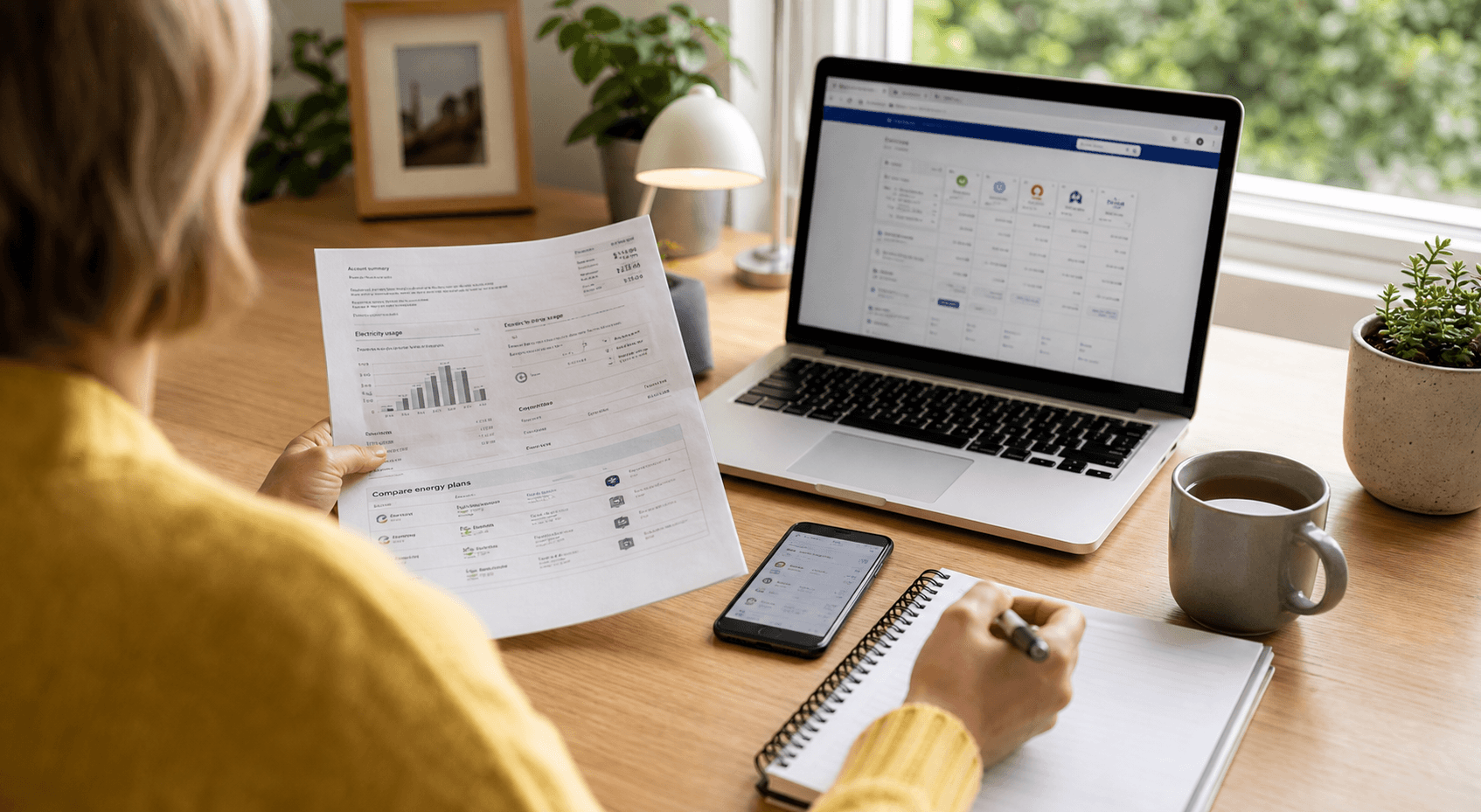
Powershop vs Lumo Energy is a useful comparison for households that want an alternative to the biggest electricity retailers but still want current provider information, clear plan documents and a retailer that fits the way they use power.
These providers are not identical. Powershop, part of Shell Energy Australia, publishes home energy offers across Victoria, New South Wales, South East Queensland and South Australia. Lumo Energy describes itself as a 100% Australian-owned retailer serving homes and small businesses in Victoria and South Australia.
Quick answer: Powershop vs Lumo Energy
Powershop may suit households that want a wider market footprint, app-led account management and EV-oriented plan options in supported states. Lumo Energy may suit households that want a smaller shortlist focused on Victoria and South Australia with straightforward access to current plan documents and fee schedules. Compare both using the exact same address and tariff setup.
Powershop vs Lumo Energy at a glance
The biggest practical difference is market footprint.
- Powershop publishes home energy offers in Victoria, New South Wales, South East Queensland and South Australia.
- Lumo Energy focuses on Victoria and South Australia for homes and small businesses.
- Powershop promotes app-led usage visibility and EV plan options.
- Lumo highlights plan-document access, local market focus and current pricing documents in its active states.
State coverage and market fit
If you live in New South Wales or South East Queensland, Powershop may be in the comparison while Lumo will not be. If you live in Victoria or South Australia, both can be relevant and the better option depends on tariff structure, fees, solar settings and current offer terms.
This matters because some comparisons look broader than they really are. For many households, the real Powershop vs Lumo Energy decision only exists in Victoria and South Australia. Outside those states, the comparison may end quickly because only one provider is available.
Tariffs, fees and plan structure
When both providers are available, compare the following first:
- daily supply charge;
- usage-rate structure;
- time-of-use or controlled-load settings if they apply;
- sign-up credits or offer conditions;
- fees and billing terms;
- solar feed-in tariff details if your home exports energy.
Lumo publishes current pricing and plan-document paths for its active states, including fee schedules and state-specific energy documents. Powershop publishes current offers and plan information, including EV plan material and state availability context. Neither provider should be judged from brand positioning alone.
EV and app-led features
Powershop stands out if EV charging habits are important to your household. Its current EV plan material highlights specific charging-window benefits for eligible customers, which can be useful if your usage pattern lines up with those windows.
Lumo may be a better fit if you do not need EV-specific plan features and would rather compare a simpler state-based retailer shortlist with published plan documentation. That is especially relevant in Victoria and South Australia, where many households just want a straightforward cost comparison.
Who may prefer Powershop?
Powershop may fit better if you:
- live in a state where Lumo is not active;
- want EV-related plan features in a supported market;
- value app-led visibility and account tools;
- are comfortable comparing promotional credits and offer structures.
Who may prefer Lumo Energy?
Lumo may fit better if you:
- live in Victoria or South Australia;
- want a more contained shortlist in Lumo's core markets;
- prefer current fee schedules and plan documents that are easy to verify;
- are comparing electricity and gas together in Lumo's active footprint.
How to compare before switching
- Confirm both providers are available at your address.
- Match the tariff type as closely as possible.
- Compare supply and usage charges using the current plan document.
- Check any EV, solar or controlled-load conditions that apply to your home.
- Review fees, sign-up credits and ongoing price conditions.
- Use your recent bill to estimate the full annual cost, not just a promotion period.
Common mistakes
One mistake is treating a wider footprint as proof of better value. Another is assuming an EV-oriented plan is automatically best without checking whether your charging pattern matches the offer conditions. A third is ignoring state eligibility and comparing providers that are not both available at the same address.
Internal next steps
Use the CompareUs electricity comparison hub, the electricity bill calculator, the Powershop provider page and the Lumo Energy provider page to move from a brand comparison into a postcode-level decision.
Sources and methodology
This guide was prepared using provider plan pages, provider support material and state-availability documentation reviewed in June 2026. Provider offers and tariffs can change, so the final comparison should always use the latest plan documents for your address.
Where should you go next?
FAQs
Is Powershop cheaper than Lumo Energy?
Not necessarily. Powershop vs Lumo Energy pricing depends on your address, tariff type, usage pattern, solar setup and the current offer available in your state.
Can I compare Powershop and Lumo Energy in every state?
No. Lumo Energy focuses on Victoria and South Australia, while Powershop has a broader eastern-market footprint.
Which provider is better for EV households?
Powershop may be more relevant for EV households because it publishes EV-specific plan material. You should still check whether the charging-window terms suit your actual usage.
Does Lumo Energy offer electricity outside Victoria and South Australia?
Based on Lumo's current public information reviewed in June 2026, its residential focus is Victoria and South Australia.
What should I compare first between Powershop and Lumo Energy?
Start with address eligibility, then compare supply charges, usage rates, controlled-load terms, solar settings, fees and any promotional conditions.
Should I choose a provider because of a sign-up credit?
No. Compare the full ongoing cost and the tariff structure after any introductory benefit, not just the opening promotion.