
Solar battery warranties: what do ten years and 70% capacity mean?
Compare home battery warranties using capacity retention, throughput, permitted uses and claim costs. See how a ten-year promise applies to your household.
CompareUs Editorial TeamEnergy guides
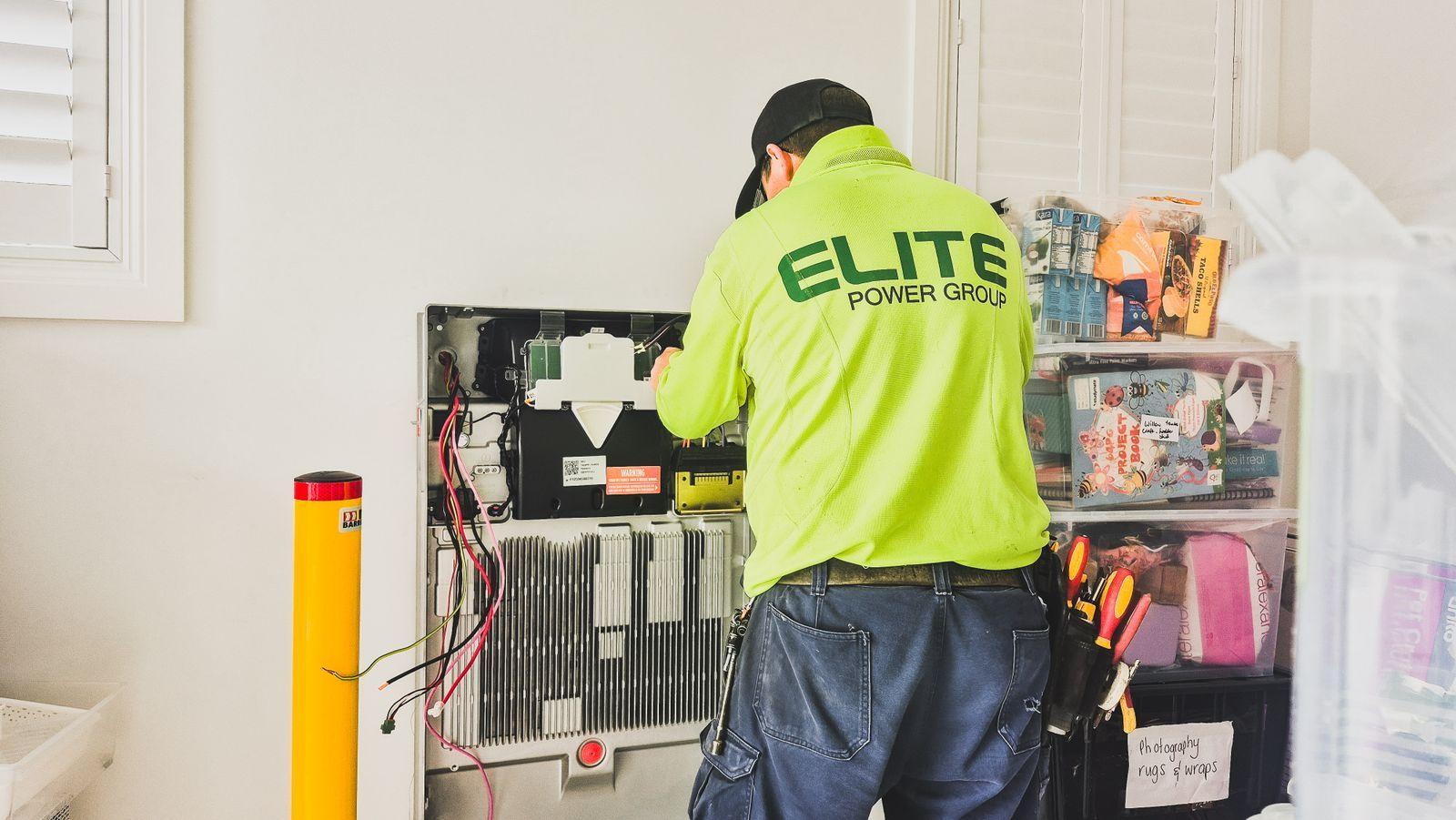
Two home battery quotes both promise a ten-year warranty. One salesperson says the battery can cycle every day. The other points to a figure in megawatt-hours. You want to know something much simpler: will it still carry the household through dinner and the evening in eight years? The answer begins with the usable capacity today, the way you intend to run it and the manufacturer's actual promise for that model.
What does a home battery warranty cover?
A home battery warranty can cover defects, retained capacity and sometimes energy throughput, but each promise has its own measurement point and conditions. Read the actual product warranty for the model offered rather than treating “10 years” as a promise of unchanged output.
Identify the piece of equipment behind each promise
Start with the model, size and number of battery modules in the quote. Match them to the Australian warranty document and effective date. For a modular system, ask whether the controller, inverter and communications gateway are included under the same document. If the installer quotes a substitute product before commissioning, repeat the check for the actual model offered. A brand can sell several generations under similar names.
Find the date that starts the clock. It may relate to installation, commissioning or another event defined by the warranty. Ask who registers the system, what proof you receive and whether there is a deadline. Save the invoice, serial numbers, commissioning record and full warranty PDF in a place you control. A bookmark on a manufacturer's website might later point to a revised document applying to a different model.
Read retained capacity against the right starting figure
Energy capacity describes how much the battery can store, usually in kilowatt-hours. Manufacturers may state a nominal capacity and a smaller usable capacity. Find the baseline named in the warranty rather than choosing whichever figure appears first in a brochure. If a hypothetical battery has ten kilowatt-hours of warranted starting capacity and promises 70% retention at the stated endpoint, that threshold is seven kilowatt-hours under the specified test conditions.
| Warranted starting capacity | Retention promise | Illustrative threshold |
|---|---|---|
| 10 kWh | 70% | 7 kWh under the specified test |
That calculation does not tell you how many kilowatt-hours will reach your kitchen appliances on an ordinary evening. An owner may reserve part of the battery for a blackout. Conversion losses, temperature, operating settings and the size of household demand can all affect what the app shows. Even a battery in good condition may purchase electricity from the grid if the oven, kettle and heater together exceed its available output power.
Understand cycles and throughput without counting every charge
A battery might discharge half its capacity before breakfast, refill from solar and discharge another half after sunset. Those movements illustrate why counting every time an app changes from charging to discharging gives an unreliable cycle estimate. A full-equivalent-cycle concept adds partial use together, but the manufacturer's method and measuring point govern the actual warranty. Do not infer the warranty count from the number of times you see the charging icon.
Throughput measures energy passing through the system under a defined method. One megawatt-hour equals 1,000 kilowatt-hours. If a document refers to aggregate energy delivered at the AC output, use that definition. Adding the energy going in to the energy coming out would count a different quantity. Ask whether a figure in your app reports cell energy, inverter output or site electricity flows. A whole-house consumption graph is rarely sufficient evidence of battery throughput.
For an illustrative warranty with a 30 MWh discharge limit and a ten-year term ending at whichever limit comes first, an average eight kilowatt-hours of measured discharge per day yields about 2,920 kilowatt-hours a year. At that constant rate the time limit would arrive just before the throughput limit. At twelve kilowatt-hours a day, 30,000 kilowatt-hours would be reached in roughly 6.8 years. These figures demonstrate the calculation and do not describe a particular product.
Check which operating modes the manufacturer permits
Using the battery to store rooftop solar for dinner, buying cheap electricity overnight, providing backup and allowing outside control can be different applications under the terms. A warranty might permit several of them on the same basis, or attach different operating limits. Ask for the clause covering your intended use and the specific service you may join. The labels in a retailer's advertisement may differ from the manufacturer's definitions.
Manufacturer warranty conditions can differ for self-consumption, backup, grid charging and virtual power plant use. Read the current warranty supplied for the exact model before changing its operating mode.
General information only, not financial, legal, medical or electrical advice.
CompareUs may receive referral fees. How we get paid.
Look at installation and service conditions
Check the permitted operating environment, installation instructions and service requirements. Ask how the proposed location performs during a hot afternoon or after heavy rain. A unit suitable for a particular outdoor location still needs installation in accordance with its specifications. If the quote relies on a garage wall that will later be enclosed by cabinetry, mention that plan now and ask what clearance and access must be maintained.
Some products use remote monitoring or software updates as part of normal operation or support. Ask what connectivity the system needs, how long an interruption matters and who restores the connection after you replace your router. Keep your own access to the monitoring account. If the installer is the only person who can download records, establish how the owner can obtain access if the business changes hands or closes.
Check the remedy before a fault occurs
Read the section explaining what the manufacturer may do after accepting a claim. Repair, replacement or another remedy can involve different logistics. Ask whether an equivalent replacement may be refurbished, how remaining coverage is calculated and who pays for diagnosis, freight, removal and reinstallation. If the site requires unusual access, make that clear before accepting a service booking. The transport cost of a large battery can be material.
Australian Consumer Law guarantees can apply alongside written warranties. The business that sold a bundled product and installation generally has responsibilities for that supply even if it used subcontractors. The precise remedy depends on the facts. Keep the written warranty and any consumer guarantee request distinct enough that a response to one is not mistaken for a decision on both. ACCC guidance on solar panels and home batteries
Compare two quotes using your household's evening
| Term | Battery A | Battery B |
|---|---|---|
| Usable starting capacity | Record from warranty | Record from warranty |
| Retained capacity at endpoint | Convert to kWh | Convert to kWh |
| Labour and freight remedy | Read policy terms | Read policy terms |
Imagine that the family normally needs six kilowatt-hours between sunset and bedtime and wants some energy left for overnight essentials. Put that demand beside each product's starting usable capacity, warranted retention, reserve and power output. A larger starting battery with a lower percentage guarantee might still offer more energy at the stated endpoint than a smaller unit with a higher percentage. Compare absolute kilowatt-hours using equivalent definitions.
Then compare the costs that a warranty headline leaves out. If one supplier offers local diagnostic visits and another requires advance approval for labour reimbursement, find out how each would handle a failure at your postcode. Ask what you would pay if the inspection finds a covered defect, and what you would pay if an unrelated inverter or network fault is responsible. Record the contact that will arrange the visit.
If a unit is replaced, ask the technician to record the outgoing and incoming serial numbers and the energy counter at changeover. A reset counter can otherwise make an older installation look brand new in the monitoring portal. Keep the service report alongside the updated warranty correspondence and commissioning record.
At handover, request a demonstration using your monitoring account. Have the installer identify the energy counter, the configured reserve, the backup circuits if applicable and the way to export data. A screenshot from commissioning provides a starting reference. Save the quote assumptions with it. Years later, that file will help you tell whether the battery has fallen below a measurable promise, whether household demand has grown, or whether changing one setting would restore the performance you expected.
Questions to ask
- Which product and installation date does the warranty name?
- How are capacity and throughput tested?
- Are VPP or backup modes permitted?
- Who arranges and pays for a local service visit?
The Australian Government explains solar and battery warranties.
Where should you go next?
FAQs
Does a ten-year warranty guarantee ten years of my original capacity?
Check the specified retention percentage, baseline and operating limits. A warranty can allow capacity to decline while still meeting its stated threshold.
Does charging twice in a day always count as two cycles?
Not necessarily. Partial charging and discharging do not automatically equal full cycles. Use the measurement method defined for that model.
Is a 30 MWh throughput allowance the same as 30 kWh?
No. Thirty megawatt-hours is 30,000 kilowatt-hours measured according to the terms.
Does a battery warranty cover VPP participation?
Check the applicable operating mode and any throughput limit for the specific program and model before enrolling.
What if the solar installer has closed?
Identify the supplier, warranty issuer and affected component. A manufacturer may still receive a product claim. Keep the invoice, serial numbers and commissioning records.