
Solar Export Charges: What They Mean for Your Bill
Solar export charges depend on your network and retailer. Learn how to check charges, feed-in credits and whole-bill costs before changing your solar plan.
CompareUs Editorial TeamConsumer utilities editorial team
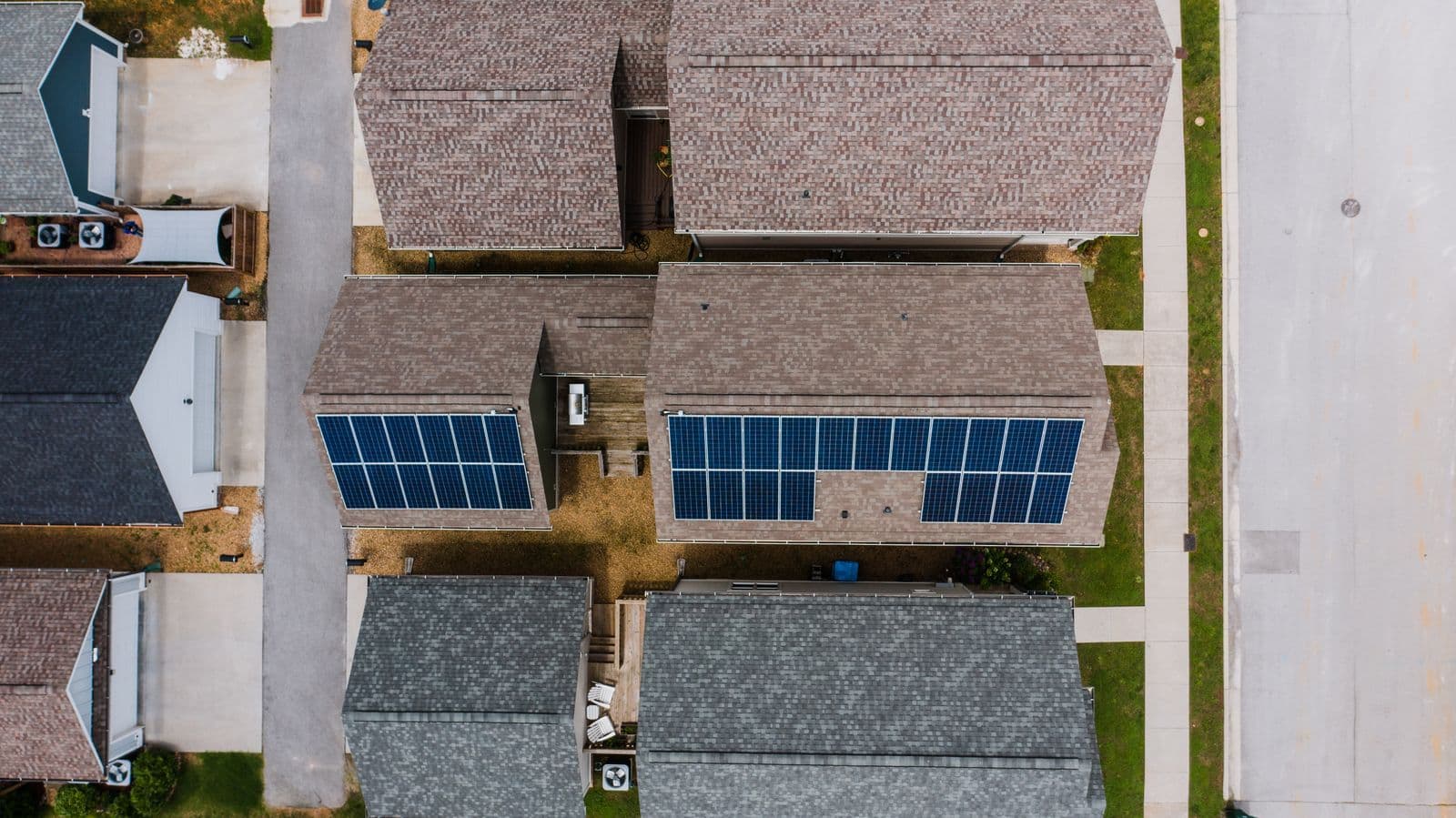
Solar export charges can sound like a bill for doing the right thing. The reality is more specific: some network tariffs put a price on exporting electricity at particular times, while retailers decide how those costs and rewards appear in the offers customers buy. You need both pieces before deciding what the change means for your roof.
Quick answer
Solar export charges are charges associated with sending electricity into the network, not a tax on owning solar panels. Whether you pay one depends on your distributor, tariff and retailer. Compare export charges alongside feed-in credits, import rates and daily supply charges to understand the effect on your whole bill.
Solar export charges and feed-in tariffs are different
A feed-in tariff is the credit your retailer offers for eligible electricity sent to the grid. An export charge is a cost associated with exporting under the relevant pricing arrangement. Neither tells you, on its own, whether your solar plan is good value.
A third concept, the export limit, describes how much electricity your connection is allowed to send out at a moment in time. It is a technical connection condition, not a price. Our guide to flexible solar exports explains that distinction in more detail. A limit is usually expressed in kW; an amount of energy billed over time is measured in kWh.
These differences matter when reading a notice. A message about an inverter’s export settings does not necessarily announce a new charge. A lower feed-in tariff does not necessarily mean the network has imposed one. Read the actual rate schedule rather than relying on a headline or social-media summary.
Who sets which part of the bill?
Your distributor operates the local poles, wires and other distribution infrastructure. Your retailer sells the electricity plan, sends the bill and sets the retail terms you accept. You generally choose between available retailers rather than choosing a new distribution network for the same address.
Ausgrid’s explanation of two-way pricing describes charges for qualifying exports during the middle of the day and rewards for exports in an evening period. It also explains that retailers can decide how to reflect the network arrangement in customer offers. This is a network-specific example, not a tariff schedule for every Australian solar home.
The distinction prevents a common mistake: taking a distributor’s published cents-per-kWh number and assuming that exact amount will be added to your next retail bill. Ask your retailer for the applicable retail price and its effective date. If a notice names a network tariff code, keep it, but do not substitute it for the customer-facing offer.
Find out whether your address is affected
Start with a recent bill and locate the distributor’s name. Then find the retailer’s latest solar rate notice or energy plan document. If neither clearly describes export pricing, ask the retailer to answer the following questions in writing.
- Does this offer include a separate export charge, a time-varying feed-in tariff, or both?
- Which dates, clock times and days apply?
- Is there a free export allowance, and how is it calculated for the billing period?
- Are there different credits at other times?
- What meter data will be used to calculate the amounts?
- Will the import usage rate or daily supply charge also change?
An annual export total is not enough if pricing is time-dependent. Two homes can export the same yearly kWh but have different outcomes because one exports more during a chargeable window. The retailer should explain the data it used if it estimates the impact for you.
Be careful with thresholds and billing days
An allowance described in round monthly terms may be implemented using a daily amount or the actual number of days in the billing period. Ausgrid’s published explanation, for example, shows monthly threshold figures changing with month length. Do not use a rounded monthly figure as a universal allowance for every bill.
Also check whether the threshold applies only to exports inside the relevant time window. Counting all exports toward a free allowance can produce the wrong answer. The same applies to evening rewards: a large annual export figure does not prove you export much when the reward is available.
Keep the period of the rates aligned with the period of the data. If a tariff changes halfway through a bill, the retailer may divide the calculation. A spreadsheet that applies the latest rate to the entire period can disagree with a correct bill.
A worked bill example, with invented rates
Here is a simplified example to show the arithmetic, not a current offer. Suppose a household exports 500 kWh in the relevant daytime window during a month. Its hypothetical offer allows 200 kWh without an export charge and charges 1 cent per kWh on the remaining 300 kWh. The export charge is $3.
Suppose the same offer separately pays 3 cents per kWh on all 500 kWh. That produces $15 in feed-in credits, leaving a net $12 export benefit for those units before considering any other export periods. It would be incorrect to describe the solar system as costing the household $3 without mentioning the credits or its avoided imports.
| Item in this invented example | Calculation | Result |
|---|---|---|
| Daytime feed-in credit | 500 kWh × $0.03 | $15 credit |
| Chargeable exports | 500 − 200 kWh | 300 kWh |
| Export charge | 300 kWh × $0.01 | $3 charge |
| Net export result for these units | $15 − $3 | $12 credit |
This example deliberately leaves out evening rewards, imports and supply charges. Add those separately before comparing plans. Actual offers can define credits and allowances differently, so do not assume the same structure applies to your contract.
Why the highest feed-in tariff may still lose
Imagine an offer with a better export credit but a more expensive import rate. A household with electric heating and heavy evening use may buy enough electricity for the higher import cost to outweigh the extra solar credit. A home with very low imports might reach a different conclusion.
Compare at least a full year of consumption and export data where available. A sunny summer quarter can flatter an export-focused offer, while a winter bill captures a different balance. Include daily supply charges on every day, even when solar meets most daytime demand.
For a first pass, build four columns: annual imports, import cost, export credits less charges, and annual supply cost. Add conditional discounts or credits only when you meet their terms, and show the price without a temporary incentive too. Use CompareUs electricity comparisons to find available options, then verify the retailer’s final solar conditions.
Is shifting consumption worthwhile?
Using solar electricity in the home can avoid buying electricity later, but the comparison is between the relevant import rate and the export value you give up. It is not automatically a saving equal to the highest advertised usage rate. Timing, appliance flexibility and the amount of surplus solar all matter.
Consider moving an existing dishwasher or laundry cycle into a period when the system is exporting. That may reduce exports and increase self-consumption. Check that the appliance can run safely at that time and that you are moving a task, not adding unnecessary use. A simple weekly routine is often easier to maintain than constant manual adjustments.
The electricity cost calculator can help estimate appliance energy costs. For solar timing, combine the estimate with actual inverter and meter data. A device may consume less than its maximum rating, while cloud cover can change the amount supplied by the grid during its cycle.
What about buying a battery?
A battery can move energy between periods, but export charges alone are not a complete business case. Include the installed cost, usable capacity, efficiency, degradation, warranty conditions and any financing. Compare outcomes with and without the battery under the same household consumption assumptions.
Separate the battery’s value from the value of simply changing tariff or shifting existing appliance use. Otherwise you can accidentally credit the battery with savings that did not require buying it. Ask the installer to show the hourly model, the assumed prices and the effect of less favourable future tariffs.
Battery or inverter settings should be changed within the approved connection conditions. Do not disable export controls or safety functions to chase a different bill result. If the equipment is part of a virtual power plant, check who controls dispatch and how credits, charges and reserved capacity are handled.
How to check the first changed bill
Match the effective date against the notice, then check the number of billing days and the export periods. Reconcile kWh before dollars. If the energy quantities are wrong, rate arithmetic will not fix the underlying problem. Compare the retailer’s interval file with your own records, allowing for differences between gross generation and net exports.
If you cannot reconcile a charge, ask for the rate, time window, allowance and calculation used. Keep the bill and the response together. Start with the retailer’s complaint process if the explanation remains unclear; use the relevant energy ombudsman if you need independent dispute help.
Do not let a small new line item distract you from a much larger change in import prices. The most useful question remains: what will this offer cost over a representative year, including the value of the solar electricity you use at home?
Sources and scope
The CompareUs Editorial Team checked this guide on 27 September 2026. Ausgrid’s two-way pricing explanation provides a specific network example. Energy Made Easy provides plan comparisons in participating jurisdictions. This guide does not quote a national export rate; the worked example is hypothetical. See our guide library for related solar and tariff explanations.
Where should you go next?
FAQs
Is there a national solar tax?
No single national charge applies to every solar household. Network tariffs, implementation dates and the way retailers price their offers differ. Check your address, distributor and current retail contract.
Will my retailer automatically pass through the network charge?
Not necessarily. A retailer can structure its solar offer differently from the network tariff it pays. Ask whether the charge is separately itemised, reflected in another rate or not directly passed through.
Does a low feed-in tariff mean I am paying an export charge?
No. A feed-in tariff is a credit for exported electricity. A lower credit and a separate export charge can both reduce solar value, but they are different bill components and should be recorded separately.
Should I turn my solar off?
Do not assume that is the best response. Your solar may still reduce paid imports and earn export credits. Compare the marginal export outcome and ask your installer about safe, compliant settings before changing the system.
Do export charges apply to electricity I use in my home?
An export charge relates to electricity sent through the connection point into the grid. Solar electricity consumed within the home does not become a grid export. Your import and supply charges remain separate.
Is a battery guaranteed to avoid the charge?
No. Results depend on battery capacity, settings, efficiency, household demand and tariff rules. Installation cost is a separate financial decision, and a battery may still export at some times.
Are flexible export limits the same thing?
No. Flexible limits control how much you are permitted to export at a given time. Export tariffs describe how qualifying exports are priced. A home can be affected by one, both or neither.