
Strata solar for apartments: who pays and whose bill falls?
Compare common-area solar, individual systems and shared solar for apartments. Work through roof access, strata approval, metering and a sample business case.
CompareUs Editorial TeamEnergy guides
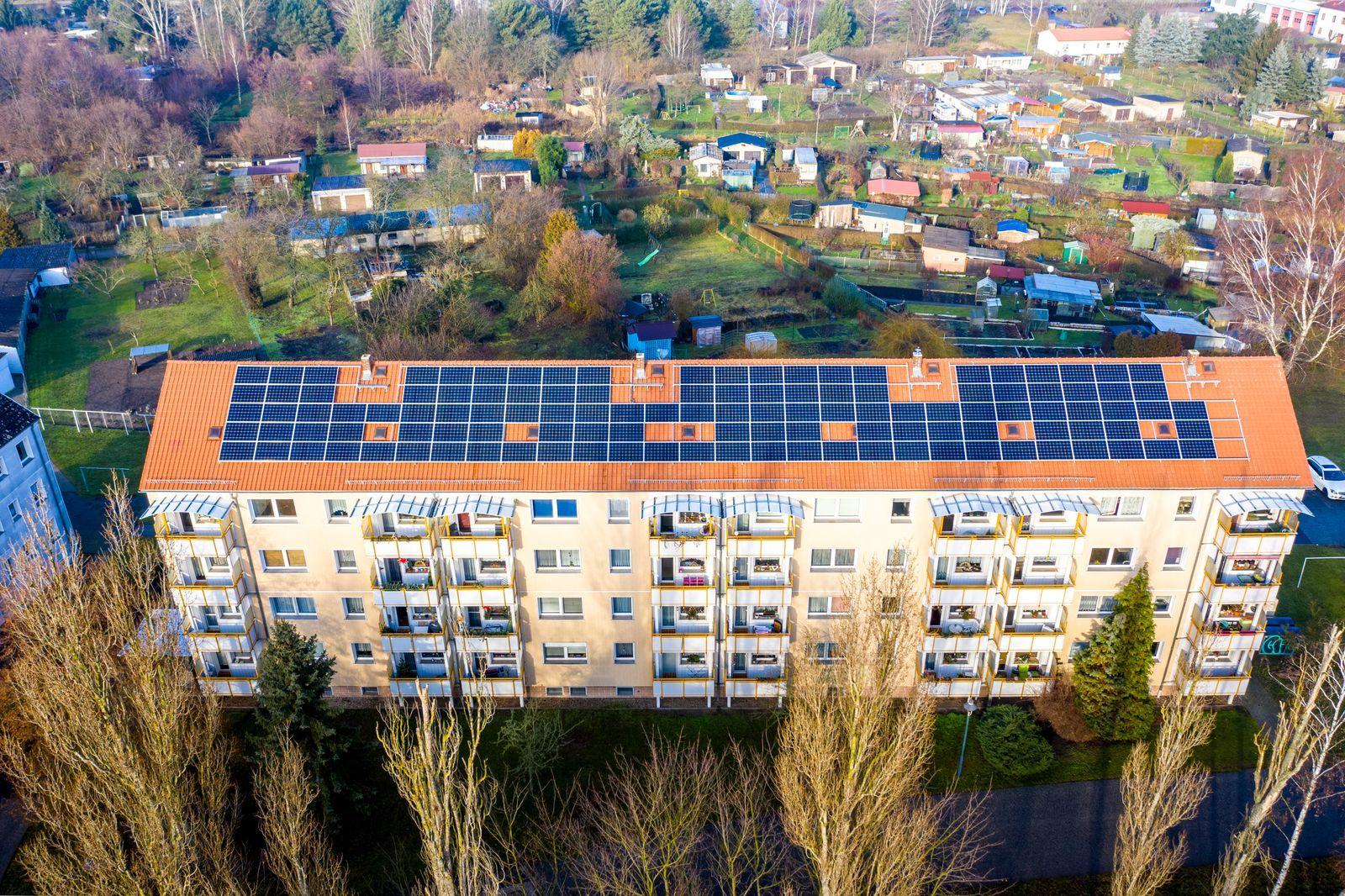
At a strata meeting, two neighbours can vote for rooftop solar while expecting quite different things. One wants lower power bills for the lift and garage. The other expects cheaper electricity inside her apartment. Both outcomes are possible, but they require different wiring, approvals and financial arrangements. Before anyone asks for a price per panel, draw a line from the proposed roof space to the electricity meter the project will serve.
Can an apartment building share rooftop solar?
An apartment building can use rooftop solar for common property, individual lots or a shared allocation model, subject to roof, electrical, billing and strata approvals. Start with the meters and bills to see who would receive each saving before pricing panels.
Follow the bills before surveying the roof
Ask the strata manager for a year's electricity bills for common facilities. Identify the account holder, meter numbers, tariff and services each account covers. There may be separate accounts for lifts, car park ventilation or a pump room. A large garage lighting bill might look promising until someone notices the lights consume most of their power after sunset. Where available, interval data shows when each meter draws electricity and gives a designer more to work with than an annual total.
Then ask residents how their apartments buy power. Some receive an ordinary bill from their chosen retailer. Others may buy through a site operator. If nobody knows, obtain a sample bill with personal details removed and get the building electrician or energy adviser to describe the arrangement. A list of apartments and a photograph of the meter room will rarely tell an owner enough to promise that a particular sharing product can be installed.
Option one: supply common property
The simplest proposal to explain at a meeting is often a system serving the owners corporation's electricity account. Daytime generation can reduce the electricity that account buys when common facilities are operating. Check how any surplus export will be treated on that account. Residents continue to receive their own household bills as usual. The benefit appears in the common budget, where the committee can track expenditure against its forecast.
This arrangement can suit a block with daytime pumps, pool equipment or other regular common loads. A walk-up block with a few stair lights may offer limited demand at midday. Ask the supplier to show how much generation the building expects to use at the time it is produced, how much will be exported, and the rates assumed for each. An impressive estimate of total annual generation tells owners very little about the value of those units.
Option two: connect individual lots
With separate systems, participating lots can receive electricity from their own panels through their own electrical arrangements. It can be easier to see who benefits, particularly in small groups of townhouses. The challenges are often physical. Cable routes, meter boards, inverter locations and safe access for future work may be shared even where an apartment has an apparently separate stretch of roof above it.
Before giving roof space to early applicants, consider what could be offered to later applicants. A shaded section and a sunny section of equal area are unlikely to deliver the same output. Keep clearances and access for building maintenance in the plan. Owners should know whether they are receiving an exclusive right, a permission with conditions or some other arrangement under their scheme. Have the proposed terms checked locally before anyone pays a deposit.
Option three: allocate solar across apartments
Shared solar equipment can distribute generation among participating apartments, depending on the building design. Ask the supplier to explain exactly how its proposed allocation works. Is each lot assigned a fixed share? Can unused energy be allocated to another apartment with a load at that moment? Who receives any export credit once participating apartments have taken what they can use? Ask for answers using the building's actual metering diagram.
Walk through an ordinary Tuesday. Apartment one is empty, apartment two has somebody working from home and apartment three runs a dishwasher at lunchtime. Then repeat the exercise for a Sunday when all three are occupied. A model that looks equitable as an annual percentage can produce different household outcomes because residents use electricity at different times. Ask for an example bill or monitoring report showing how a resident would see their allocation.
Put numbers beside the two kinds of solar electricity
Suppose a common-area system generates 12,000 kilowatt-hours in a year. The building uses 7,000 as they are produced and exports the remaining 5,000. At illustrative rates of 30 cents per kilowatt-hour for avoided imports and 5 cents for exports, the annual energy value is $2,100 plus $250, or $2,350 before costs. The calculation assumes those rates apply at the relevant times. Daily supply charges still matter when forecasting the total bill.
| Case | Self-used generation | Exported generation | Avoided imports | Export credit | Total before costs |
|---|---|---|---|---|---|
| A | 7,000 kWh | 5,000 kWh | $2,100 | $250 | $2,350 |
| B | 5,000 kWh | 7,000 kWh | $1,500 | $350 | $1,850 |
Now suppose the garage upgrade moves more consumption out of solar hours. If the building uses only 5,000 kilowatt-hours of that same generation and exports 7,000, the value falls to $1,500 plus $350, or $1,850. The panels have produced exactly as much electricity in both cases. The $500 difference comes entirely from valuing a unit of electricity differently depending on where it goes. These are examples for a meeting paper, not quotes or forecasts.
For a shared project, repeat the calculation separately for each account using the applicable tariff. Include any annual platform charge, service contract and financing costs. A project can improve the building-wide total while leaving a particular participant worse off after fees. Give owners a range showing what happens with a lower export rate, less daytime use or fewer participants, and identify which assumptions the owners can influence.
General information only, not financial, legal, medical or electrical advice.
CompareUs may receive referral fees. How we get paid.
Get a roof, electrical and insurance assessment
Have a qualified professional assess roof condition, waterproofing, structural suitability and access. Check the maintenance plan for upcoming roof replacement. Installing panels now and paying to remove and refit them two years later can change the business case. Ask who pays for removal when common property needs attention and whether the quote includes a design that leaves building services accessible.
Get the installer to identify switchboard or metering work, cable paths, distributor approvals, export constraints and any access required inside individual lots. Ask which parts of the proposal depend on an inspection that has yet to happen. Before voting, distinguish a firm price from an allowance for work behind a locked meter room door. Residents also need to know about any planned interruptions, how much notice they will receive and who will help if service fails to resume.
Take a decision the scheme can implement
Identify the applicable state or territory rules and read the strata plan and by-laws. Roofs, conduits and meter rooms can involve common property. A committee discussion may get the investigation started while formal approval rests elsewhere. In NSW, the government describes how an owner can submit a sustainability infrastructure proposal for a general meeting, including ownership, cost, access and any necessary by-law changes. Use guidance for the jurisdiction where the building actually stands. NSW sustainability infrastructure upgrades
If the numbers are still preliminary, ask owners to vote on a defined feasibility budget and scope first. That allows the committee to obtain an electrical survey or legal advice without suggesting that construction is already approved. For a final decision, circulate the design, timetable, funding arrangements, maintenance responsibilities and alternatives early enough for owners to read them. Explain what happens if the project loses a grant or a contractor changes the price.
Check the first full bill after commissioning
Arrange a handover for whoever manages the common account and for participating residents. Record commissioning dates, equipment serial numbers, monitoring access and a contact for faults. Give each participant a plain-language description of what should appear on their bill or in their monitoring account. Avoid publishing individual consumption records to the whole building when a summary of performance will answer the committee's question.
At the first review, check the dates carefully. A bill spanning several weeks before commissioning is a poor test of forecast savings. Compare generation and use over matching periods, allow for seasonal changes and check any tariff changes before drawing conclusions. If production looks normal but a participant sees no benefit, trace their meter and allocation with the operator. The right measure of a successful strata solar project is whether the agreed benefits reach the accounts owners voted to support.
Questions to ask
- Whose meter will the system connect to?
- How will savings and maintenance costs be allocated?
- What roof and electrical approvals are needed?
- Who monitors the first full bill after installation?
Solar Victoria explains solar for apartment buildings.
NSW Government explains strata sustainability upgrades.
Where should you go next?
FAQs
Does living on the top floor give me the right to install solar?
Check the strata plan, by-laws and local approval process. Proximity to the roof alone does not establish permission to alter it or run cables through common areas.
Can common-area solar reduce my personal electricity bill?
A system connected solely to the common meter reduces qualifying purchases on that account. Your personal account needs its own connection or a sharing arrangement to receive a direct benefit.
Do all apartments need to join?
Participation depends on the design, funding and approval terms. Ask how non-participants are treated and what it would cost to add an apartment later.
Should a strata committee rely on an apartment solar grant?
Check the current program terms, approval timing and funding availability before signing. Show owners whether the project still works if funding falls through.
What happens when the roof needs replacing?
Set out who authorises removal and reinstallation, who pays, how to protect warranties and how long residents may lose access to generation.